


Refugee rights advocacy plays a pivotal role as the globe navigates an ongoing displacement crisis and humanitarian protection issues. International protection is anchored in legal frameworks like the Universal Declaration of Human Rights and the 1951 Refugee Convention.
These frameworks assert that seeking asylum is a right for individuals facing persecution fear or conflict.
Refugee status ensures several entitlements, including protection against discrimination and the principle of nonrefoulement, which prevents refugees from being returned to harm.
Human rights law transforms these into actionable obligations for signatory states.
But what are the essential rights each refugee holds under international law? Let’s delve into how these frameworks maintain dignity and set the benchmark for host country obligations.
Next: Understanding the 1951 Refugee Convention
The 1951 Refugee Convention: A Pillar of Asylum Protection
Geneva Convention revisions post-World War II led to the birth of the 1951 Refugee Convention.
This laid the foundation for contemporary international protection strategies. International treaties like this Convention introduced the principle of nonrefoulement, preventing countries from returning refugees to danger zones, thus becoming a keystone of the global refugee law framework.
International cooperation is crucial, with over 140 signatory states currently upholding these legal obligations.
In practice, protection obligations during the Vietnamese “boat people” crisis showcased how crossborder collaboration enabled effective refugee resettlement and provided safe haven to thousands.
- Key provisions: nonrefoulement, recognition of persecution fear, and host country support
- Impact: Established standards for asylum seeker rights and refugee recognition
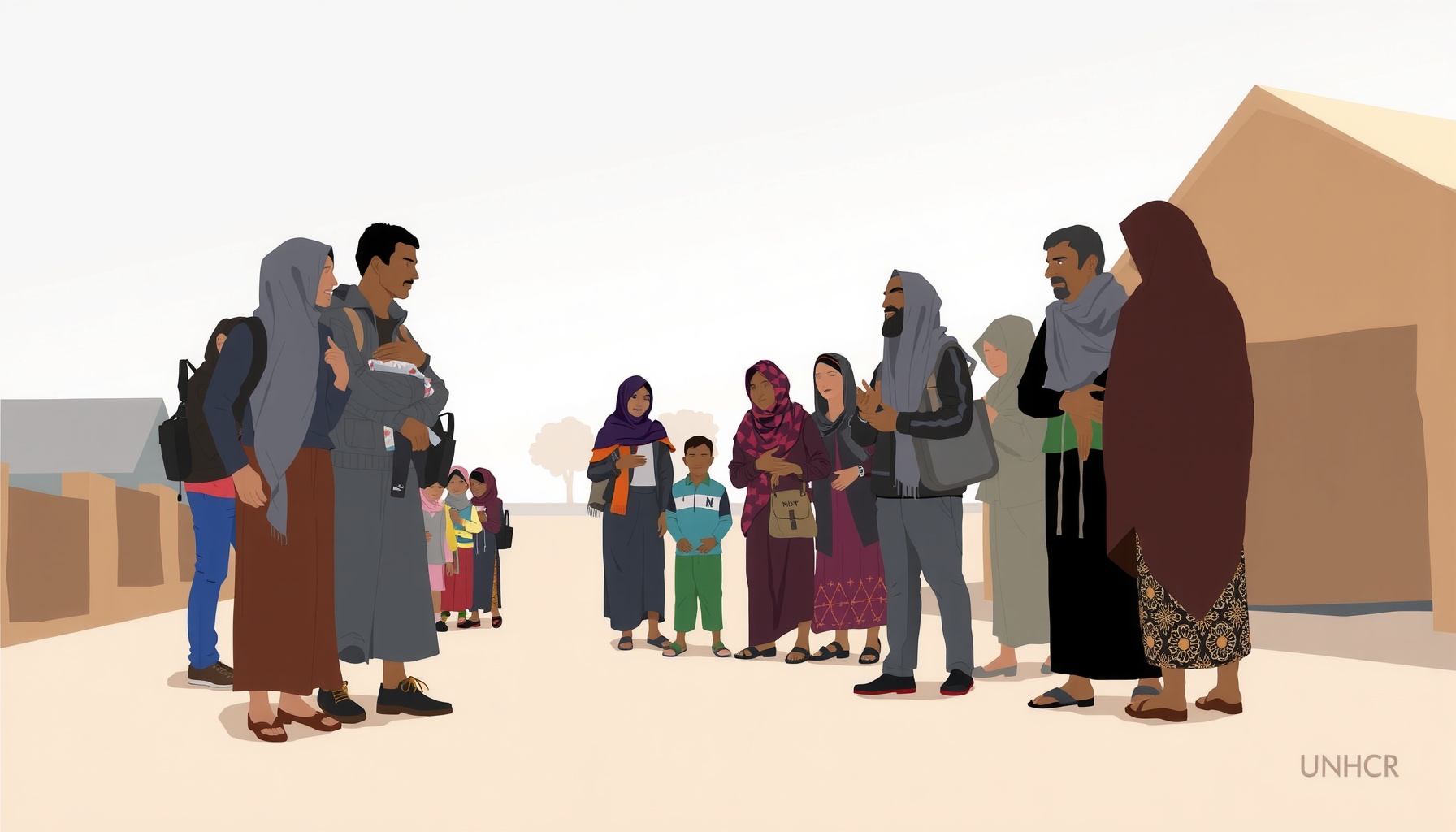
Introduction to the Non-Refoulement Principle
Asylum protection under international law remains a cornerstone of global protection regimes, highlighted by the nonrefoulement principle embedded within the 1951 Refugee Convention provisions. This doctrine ensures that no individual seeking refugee status due to persecution fear is returned to environments where their life or freedom would be threatened.
The Geneva Convention, a pivotal legal instrument, places steadfast legal obligations on signatory states, reinforcing the duty to safeguard human dignity amidst forced migration and displacement crisis events.
International treaties and protection principles form a robust foundation, ensuring that humanitarian protection continues to evolve with contemporary asylum procedures and challenges.
The world contends with increasing crossborder migration, consistently upholding international protection obligations remains paramount before exploring the principle’s deeper framework in the next section: What is Non-Refoulement Principle?
What is Non-Refoulement Principle?
The concept of the nonrefoulement principle stands as a significant safeguard in human rights law, directly linked to international humanitarian law and core instruments like the Universal Declaration of Human Rights. Case studies—such as Soering v.
United Kingdom and Hirsi Jamaa and Others v. Italy—demonstrate its application, showing how courts have protected individuals from forced return based on persecution fear or risk of torture.
Influence on Asylum Procedures
The principle fundamentally shapes asylum procedures today, requiring signatory states to honor legal obligations throughout refugee status determination, appeals, and migration policy decisions.
During a displacement crisis, like the Syrian conflict, this protection regime is tested as international cooperation and humanitarian aid strive to uphold nonrefoulement amidst complex mass migration scenarios.
The role of refugee agencies is crucial in managing the refugee protection system and ensuring asylum seekers’ rights are respected.
“The nonrefoulement principle remains a key element of international protection frameworks, ensuring that asylum seekers and refugees are not returned to danger. ”
Practical Applications in Crisis Situations
- During the Syrian conflict, the nonrefoulement principle faced challenges as host country obligations and state sovereignty issues arose.
- Refugee resettlement processes and humanitarian aid are vital components in supporting affected populations.
- Migration management and asylum framework enforcement are essential for upholding international asylum standards.
Refugee crisis management and legal representation for refugees require constant adjustments to align with the evolving landscape of international cooperation and protection principles. Ensuring comprehensive refugee rights advocacy and support during asylum interviews and refugee integration processes is fundamental to the overall success of the refugee protection regime.
| Non-Refoulement Principle | Challenges and Applications |
|---|---|
| Embedded in the 1951 Refugee Convention | Faced challenges during the Syrian conflict |
| Protects individuals from forced return | State sovereignty issues arose |
| Linked to international humanitarian law | Requires international cooperation and aid |
Signatory States: Legal Obligations Explained
Asylum protection begins with ensuring that the legal obligations of signatory states are upheld as outlined in the Refugee Convention. Each country must balance state sovereignty with key duties under international protection frameworks.
The core of these responsibilities includes the nonrefoulement principle, which mandates that no signatory state should return refugees to locations where they face persecution fear or severe harm.
Historical Shifts and Compliance
International cooperation is necessary as historical shifts, such as the end of the Cold War, have influenced how states comply with these obligations.
Recent displacement crises add further complexities, necessitating a reevaluation of obligations and practical capacity for all involved.
Smaller and resource-constrained states often face intensified burdens that challenge their border control and refugee assistance infrastructure.
Unique Challenges and Lesser-Known Obligations
Certain signatory countries encounter unique challenges, such as ensuring refugee camps are accessible to third-party monitoring, which underscores the Convention’s holistic approach to humanitarian aid and protection standards. These obligations require creative strategies to manage forced migration and promote refugee resettlement.
Legal obligations are not static; they demand constant adaptation and commitment to international humanitarian law.
International treaties and agreements play a role in shaping how these responsibilities evolve, emphasizing the need for continuous dialogue and cooperation.
By embracing a comprehensive approach, states can more effectively realize and uphold their responsibilities, paving the way for better asylum seeker processing and refugee integration.
Signatory States’ Legal Obligations
- The principle of nonrefoulement is a cornerstone of the Refugee Convention, prohibiting the return of refugees to places where they risk persecution.
- International cooperation is essential in addressing displacement crises and ensuring compliance with refugee protection obligations.
- Smaller states often face challenges in maintaining adequate refugee assistance infrastructure due to limited resources.
- Ensuring accessibility of refugee camps to third-party monitoring is crucial for upholding international humanitarian standards.
How Does Refugee Status Determination Work?
The intricate process of refugee status determination is central to ensuring asylum protection and safeguarding human rights. This process is grounded in international treaties, such as the Geneva Convention, which is upheld by signatory states and bolstered by the protection regime of various organizations.
International Framework and State Obligations
Under international protection standards, the refugee protection system is developed through the cooperation of signatory states and global entities like the UNHCR.
These bodies work together to maintain the core protection principles embedded in the 1951 Refugee Convention and the principle of nonrefoulement, which prevents sending individuals back to danger.
- Each host country must adhere to their legal obligations as outlined in international treaties and conduct thorough assessments for each asylum seeker.
- Global agencies enhance migration management by offering technical support and sometimes facilitating refugee recognition when local frameworks need bolstering.
Challenges and Practical Improvements
The refugee intake process faces unique challenges, driven by forced migration and complex border control issues. Practical steps such as improving refugee registration, providing enhanced training for officials, and fostering greater transparency in the asylum procedures can significantly enhance the asylum adjudication process.
By advancing migration policy practices, states can better fulfill their protection obligations, assisting in the efficient handling of the displacement crisis. Focusing on refugee rights advocacy ensures that the needs of asylum seekers are met, promoting humanitarian aid and facilitating smoother refugee integration.
Refugee Status Determination
- Refugee status determination is essential for asylum protection and human rights safeguarding.
- The process is based on international treaties like the Geneva Convention.
- Signatory states and organizations collaborate to uphold protection principles such as nonrefoulement.
- Challenges in the process include forced migration and border control issues.
Asylum Protection in International Context
Asylum protection is a fundamental aspect of international cooperation, designed to safeguard those fleeing persecution fear and forced migration. The Geneva Convention has played a crucial role in establishing protection principles that uphold the rights of asylum seekers, emphasizing their right to seek refuge in a safe haven.
Nonrefoulement, a critical component of this framework, ensures that individuals are not returned to territories where their lives or freedoms may be threatened.
Human rights law further supports these protections, ensuring humanitarian aid and legal representation for refugees.
Exploring Asylum Protection and Rights
Refugee status determination is a key process in the asylum framework, ensuring that each claim is evaluated under international asylum standards.
Recent changes in migration policy have influenced refugee recognition, with new measures aimed at enhancing transparency in asylum procedures. One notable update is the increased focus on asylum seekers support, which emphasizes the need for fair and efficient processing of asylum interviews to ensure proper asylum access.
Legal Protections and Recent Developments
Legal obligations within the refugee protection system must be carefully managed to balance state sovereignty with protection obligations.
Recent legal updates, including new asylum adjudication approaches, have sparked debates on asylum case law and state sovereignty. These discussions highlight the ongoing need for policy refinement to better address the global displacement crisis.
Improving Asylum Rights and Procedures
Refugee rights advocacy groups propose practical solutions to enhance protection regimes.
Measures such as improved refugee resettlement programs, better refugee camp conditions, and streamlined asylum seeker processing are vital.
Increased international cooperation is necessary to uphold protection obligations, ensuring that legal representation for refugees is accessible and that migration management is effective.
“By aligning international treaties with evolving refugee protocol, we can ensure that asylum seeker rights are fully respected and protected. ”
Asylum Protection
- The Geneva Convention establishes key principles for asylum seeker rights.
- Nonrefoulement ensures individuals are not returned to dangerous territories.
- Recent policy changes aim to enhance transparency in asylum procedures.
- Refugee rights advocacy groups propose solutions for better resettlement programs.
Humanitarian Protection under International Law
International cooperation remains a cornerstone of effective asylum protection, particularly during significant displacement crises such as the Syrian refugee situation. During these events, humanitarian aid was provided in alignment with the 1951 Refugee Convention provisions and related international protection instruments.
Importantly, the legal obligations of signatory states require a clear separation between enforcement-focused policies and those geared toward providing immediate relief and asylum access for the affected individuals.
The principle of nonrefoulement stands as a fundamental pillar of international humanitarian law, prohibiting the return of individuals to areas where they face persecution fear or danger.
Recent advancements in international treaties and strengthened cross-border migration coordination illustrate evolving standards and highlight the necessity of shared protection obligations as complex displacement crises arise.
A notable case demonstrating these laws in action occurred during the Venezuelan migration, where refugee rights advocacy resulted in enhanced access to refugee resettlement and support measures.
“Protection obligations are not just legal requirements but moral imperatives, remarked a leading refugee agency representative during a recent international forum.
To bolster humanitarian protection further, strategies could include:
- Enhancing migration management frameworks for timely refugee intake.
- Promoting asylum seeker rights through comprehensive asylum adjudication processes.
- Strengthening international cooperation to ensure equitable refugee relocation practices.
Humanitarian Protection
- The 1951 Refugee Convention is a key international treaty providing the foundation for refugee protection.
- The principle of nonrefoulement is central to international humanitarian law, ensuring individuals are not returned to danger.
- Recent international treaties have improved cross-border migration coordination and shared protection obligations.
- Refugee rights advocacy has led to better access to resettlement and support measures, as seen in the Venezuelan migration case.
Rights of Refugees Under International Law
Asylum Protection under international law is guaranteed by the legal obligations of signatory states. The Geneva Convention remains pivotal, as more than 10 million people have experienced forced migration and displacement recently.
This highlights protections such as refugee status and safe haven policies.
Host country obligations extend beyond numbers; they encompass universal principles grounded in human rights law and international treaties, which define a protection regime for those in need.
Ensuring compliance with international humanitarian law while facilitating refugee status determination procedures are ongoing priorities in this displacement crisis.
As we transition to exploring the challenges in crisis management, these legal standards continue to guide us.
Challenges in Refugee Crisis Management
Migration Policy is profoundly influenced by global politics and evolving alliances, directly impacting border control and asylum access eligibility. Resource allocation remains a significant barrier, as efforts by refugee agencies must extend across immense refugee camps with limited resources.
Delivering humanitarian aid in unstable regions is a unique challenge, often compounded by language barriers that hinder refugee integration.
To address these issues, innovative use of technology for service coordination has been embraced.
Establishing community-based asylum seekers support programs focuses on enhancing communication and providing job training, bridging critical service delivery gaps.
Refugee Rights and Crisis Management
- Over 10 million people have recently experienced forced migration and displacement.
- The Geneva Convention is crucial for ensuring asylum protection under international law.
- Global politics and evolving alliances significantly influence migration policy and asylum access.
- Resource allocation remains a major challenge for refugee agencies operating in large camps.
Role of International Cooperation in Refugee Rights
International treaties, including the 1951 Refugee Convention, are fundamental in providing asylum protection and preventing the return of refugees to danger. Adherence to the nonrefoulement principle ensures safe haven for those fleeing persecution.
Signatory states are bound by legal obligations to uphold these rights under international protection laws, working within frameworks established by the United Nations High Commissioner for Refugees (UNHCR) to support humanitarian needs effectively.
Post-World War II agreements significantly shaped present-day cooperation.
The 1951 Convention’s inception and the establishment of the refugee agency UNHCR marked the beginning of a protection regime that sets global standards for humane treatment and responsibility sharing among nations.
Such agreements are vital for refugee integration and the economic boost provided by coordinated international action.
The EU-Turkey Agreement stands out as a practical example of collaboration, addressing border control and humanitarian response collectively. Through this agreement, conditions for asylum seekers have improved significantly, illustrating the potential of joint strategies in managing the complexities of crossborder migration and forced migration challenges.
International Cooperation in Refugee Rights
- The 1951 Refugee Convention establishes the principle of nonrefoulement, preventing the return of refugees to countries where they face danger.
- Signatory states have legal obligations to adhere to international protection laws as guided by the UNHCR.
- Post-World War II agreements laid the foundation for modern refugee protection frameworks and international cooperation.
- The EU-Turkey Agreement exemplifies successful international collaboration in managing border control and improving conditions for asylum seekers.