
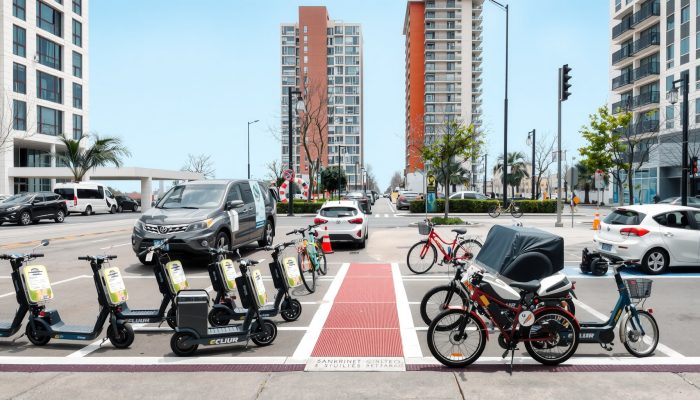
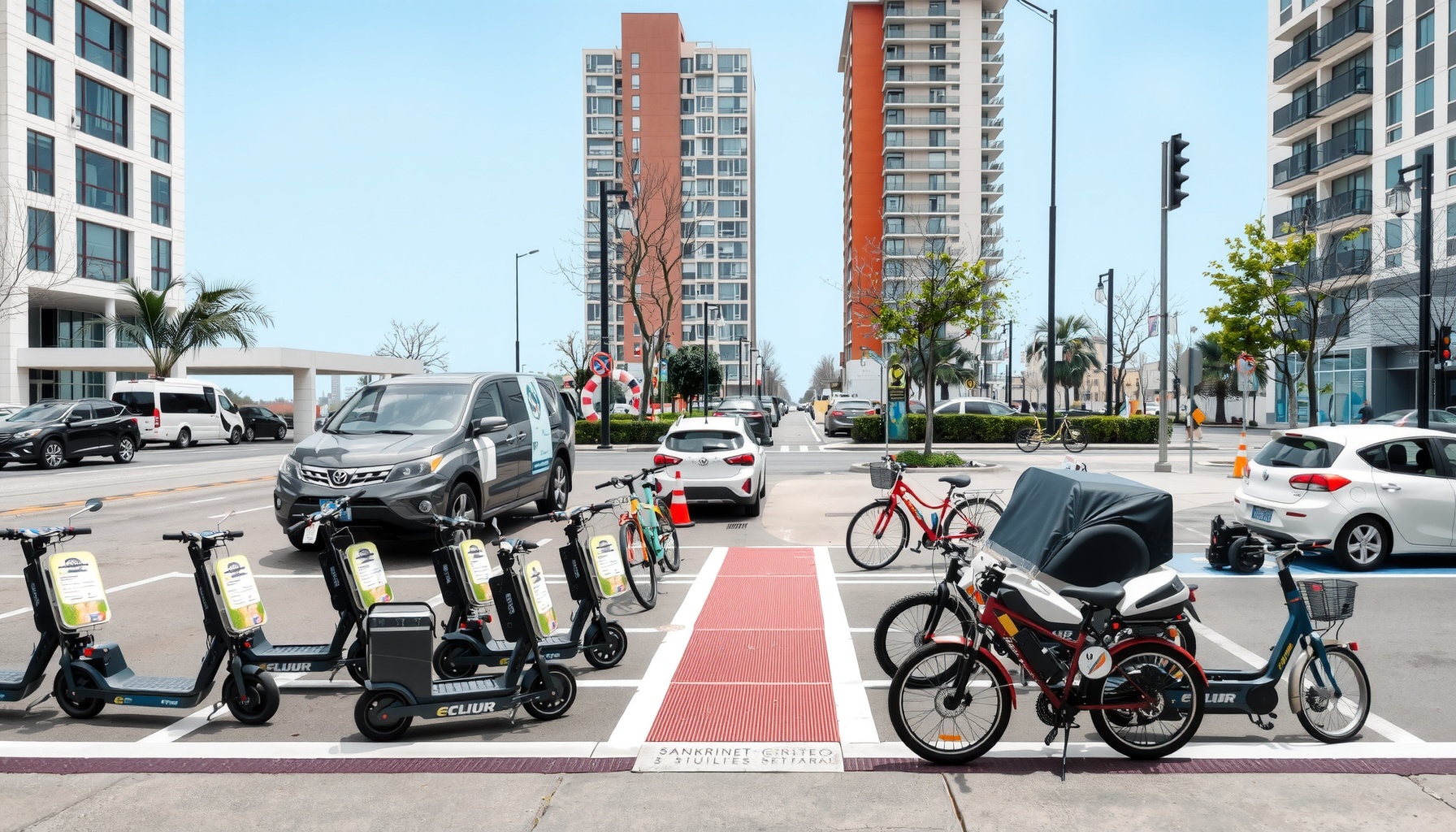
Rapid expansion in urban mobility solutions presents challenges in managing sharedmobility vehicle parking. Municipal regulations are integral to addressing concerns, particularly with liability considerations in cases of improper parking.
Parking compliance remains a focal point for both operators and users to avoid penalties and ensure smooth integration within urban transit policies.
Legal Challenges in Sharedmobility Parking
The rise of e-scooters and micromobility systems has led to complex legal landscapes.
Mobility device ordinances dictate permitted parking areas, protecting public right-of-way and enhancing pedestrian infrastructure.
To mitigate risks, cities employ vehicle impoundment strategies and impose parking infraction penalties.
Effective curbside management and adherence to city planning guidelines are crucial to alleviate traffic congestion relief and promote alternative transit modes.
- The necessity for parking enforcement strategies stems from the need to prevent sidewalk obstruction and ensure equitable public space allocation.
- Collaboration across stakeholders facilitates the enforcement of urban planning commissions’ goals, merging urban mobility innovation with public safety.
- City zoning laws, impacting mobility hubs, guide the expansion of dockless vehicle programs.
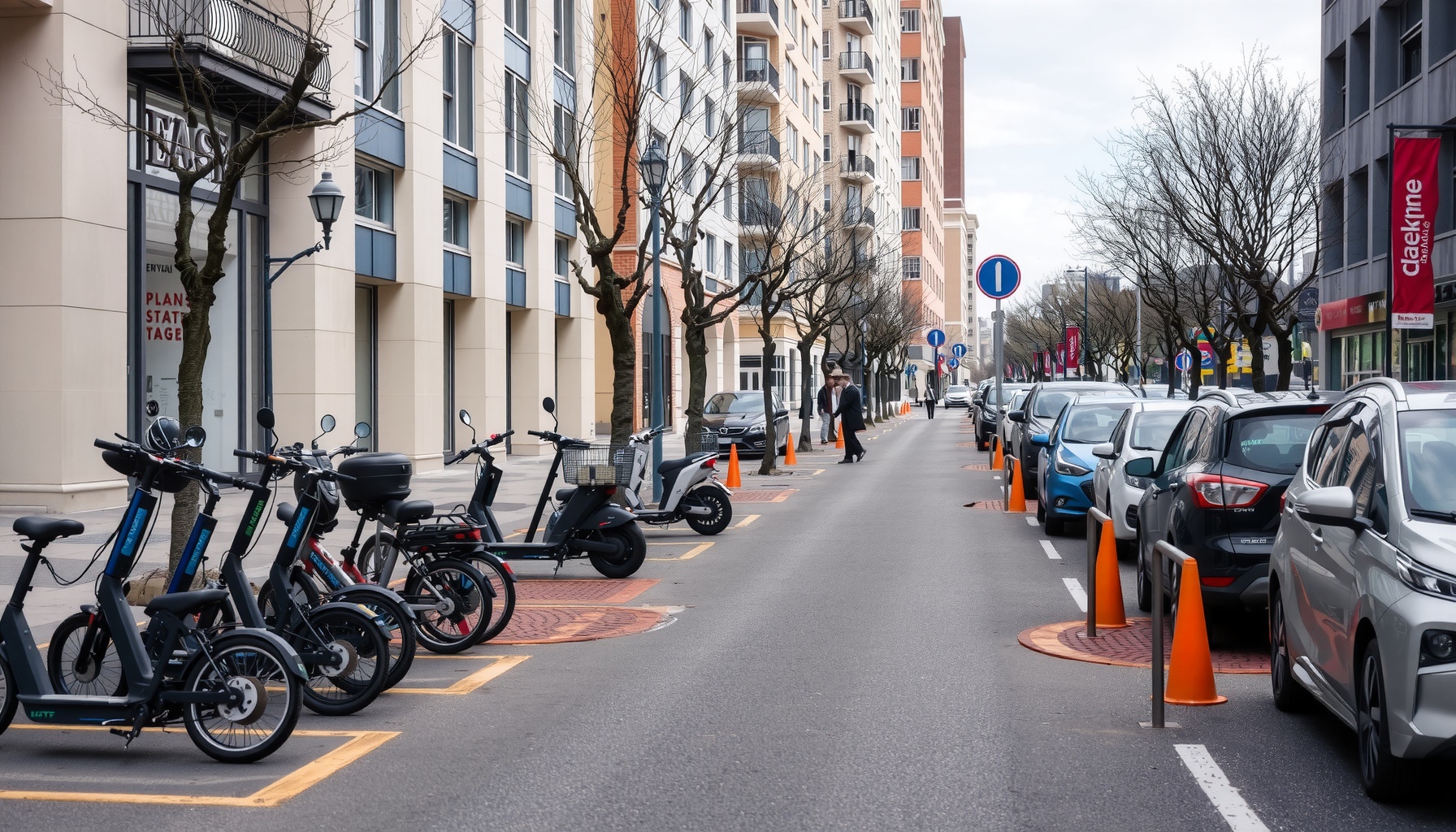
Municipal Regulations for Shared Mobility
Successful integration of shared mobility platforms necessitates well-defined municipal frameworks. Scooter fleet operations and their parking compliance rely heavily on robust regulatory systems.
“City zoning laws influence where scooters can be parked, impacting transportation network companies and their strategies for compliance. ”
- Expansion of dockless vehicle programs requires attention to zoning impact and parking permit applications.
- Examples like Portland emphasize the need for city-specific permits that regulate both reserved and free-floating vehicles.
- The model in San Francisco showcases effective urban street design through marked parking zones that enhance pedestrian safety initiatives.
Adapting municipal strategies involves city-specific regulations, ensuring efficient public transit integration and preparing for evolving urban accessibility challenges.
How Do Parking Compliance Rules Apply?
Municipal regulations have evolved to accommodate the burgeoning shared mobility sector, particularly around parking compliance for platforms like e-scooters. These urban transit policies require cities to balance traditional parking rules with new approaches for alternative transit modes.
Public rightofway management and mobility device ordinances are crucial for maintaining pedestrian infrastructure.
Comparing With Traditional Vehicle Parking
Unlike traditional vehicle impoundment and parking permit applications, dockless vehicle programs and city zoning laws are reshaping curbside management.
The need for micromobility systems within urban planning commissions has led to an emphasis on urban mobility solutions and public safety measures.
This shift results in a proactive approach to curb access fees and vehicle retrieval processes.
City Planning Guidelines: Legal adjustments have been essential for urban mobility innovation, as cities define parking zone designation and specific scooter fleet operations.
Practical Steps for Improvement
Transportation network companies must collaborate with municipal code enforcement to enhance parking infraction penalties and urban congestion management.
Shared mobility governance differs significantly from traditional enforcement options. To optimize transportation demand management, cities might deploy vehicle usage monitoring technology and engage community stakeholders in transportation policy development.
This ensures effective urban accessibility and public transit connectivity.
- Public Space Allocation: City planning guidelines can integrate urban mobility solutions, enhancing pedestrian safety initiatives and traffic congestion relief.
- Community Engagement: Engaging local communities in discussions about shared mobility platforms and street access regulations can improve compliance and city zoning laws.
For urban planning commissions, facilitating practical steps like implementing scooter parking solutions and transportation infrastructure investment can foster mobility hubs and enhance shared mobility governance. The collaboration with community stakeholders is essential in advancing urban planning guidelines and promoting transportation equity.
Parking Compliance and Shared Mobility
- Municipal regulations are adapting to accommodate shared mobility platforms like e-scooters.
- Urban transit policies aim to balance traditional parking rules with new approaches for alternative transit modes.
- City zoning laws and dockless vehicle programs are reshaping curbside management.
- Collaboration with community stakeholders is essential for advancing urban planning guidelines and promoting transportation equity.
Liability Concerns for Improperly Parked Scooters
Managing liability for improperly parked e-scooters is a shared responsibility between individuals and service providers. Urban transit policies highlight the role of insurance as a necessary safeguard against claims related to property damage or personal injury.
Municipal regulations must enforce clear mobility device ordinances to mitigate these issues.
Case Study: Santa Monica’s Approach
By implementing stringent mobility device ordinances, Santa Monica has effectively addressed issues with scooter fleet operations.
This city requires operators to carry liability insurance and take immediate corrective actions to ensure parking compliance.
Vehicle impoundment and penalties for parking infraction highlight their commitment to safety.
Designated parking areas play a critical role in reducing liability claims. With clear zoning impact fees and parking zone designations, cities can encourage compliance while minimizing risks.
Risk Reduction Strategies
To enhance public safety measures, cities should establish visible parking zones near pedestrian infrastructure and curbside management locations.
These urban mobility solutions not only protect all parties but also align with modern transportation policy development goals.
Scooter Liability Management
- Insurance is essential to safeguard against property damage and personal injury claims.
- Santa Monica requires scooter operators to carry liability insurance and ensure parking compliance.
- Designated parking areas help reduce liability claims and encourage compliance.
- Visible parking zones near pedestrian infrastructure enhance public safety.
Public Right-of-Way and Scooter Parking
Cities face complex challenges as they navigate the intricacies of scooter parking within the public right-of-way. Municipal regulations are pivotal in ensuring urban mobility solutions that harmonize accessibility and safety in public spaces.
Improperly parked scooters can obstruct pedestrian pathways, creating significant barriers for individuals with disabilities and complicating emergency services access.
Impact on Pedestrian Access
– Pedestrian Infrastructure: Scooters left on sidewalks can impede wheelchair accessibility by blocking ramps and designated pathways.
– Public Right-of-Way: Misplaced scooters can obstruct emergency vehicles, disrupting pedestrian flow.
Legal Precedents and Balancing Needs
Legal precedents emphasize the importance of scooter parking laws and robust enforcement options to address liability issues.
Cities are leveraging municipal parking permit rules alongside creating designated scooter parking zones to reconcile the needs of scooters and pedestrians. This involves employing curbside management strategies to minimize urban clutter and enhance public safety.
Strategies for Effective Management
Implementing effective strategies for scooter parking management involves establishing parking zone designations and enforcing stringent regulations to deter parking infraction penalties.
Engaging public input is essential in crafting solutions that reflect both urban transit policies and the respect for public right-of-way access.
.
Scooter Parking
- Improper scooter parking can block wheelchair ramps and designated pedestrian pathways.
- Municipal regulations are essential for balancing urban mobility and public safety.
- Legal precedents support the need for scooter parking laws and enforcement measures.
- Designated scooter parking zones help minimize urban clutter and enhance accessibility.
H2 id=introduction-to-shared-mobility-and-city-enforcement-challenges>Introduction to Shared Mobility and City Enforcement Challenges
Urban mobility innovation is revolutionizing city landscapes, as shared mobility platforms—from e-scooters to bikes—transform daily commutes and lessen dependence on private vehicles. Municipal regulations face challenges in keeping pace with the surge of dockless vehicle programs.
This often results in cluttered sidewalks, safety hazards, and tensions over public right-of-way access.
Legal issues commonly arise in shared mobility vehicle parking, mainly when mobility device ordinances clash with existing city planning guidelines or zoning impact fees.
Cities increasingly acknowledge that traditional parking compliance strategies are inadequate for dynamic, app-based systems, necessitating new approaches that incorporate technology and adapt to changing public space allocation challenges. Effective curbside management is crucial for urban centers striving to harmonize mobility needs with community engagement and pedestrian infrastructure priorities.
Enforcement Options for City Authorities
Municipal regulations can be effectively supported by deploying GPS tracking systems, which allow city authorities to monitor the real-time locations of shared mobility vehicles, significantly enhancing municipal code enforcement and parking compliance efforts.
For instance, in San Francisco, technology-driven enforcement measures have successfully reduced improperly parked e-scooters by implementing geofenced parking zone designation and issuing fines for violations detected via GPS data.
Cost-Effective Urban Mobility Solutions
Urban mobility solutions that leverage existing infrastructure can offer cost-effective measures. Repurposing traffic congestion relief cameras for dual-use monitoring of mobility devices is one such strategy, minimizing additional taxpayer burden.
Collaboration with transportation network companies and incorporating scooter fleet operations data into city systems can streamline enforcement efforts, ensuring alignment with city zoning laws and public safety measures.
Practical Tips for Municipalities
- Develop clear parking infraction penalties to enhance compliance.
- Explore partnerships with tech providers for scalable, affordable enforcement tools.
- Emphasize strategic, tech-enabled approaches that protect public right-of-way and pedestrian infrastructure.
This approach not only supports the long-term sustainability of urban transit policies but also reinforces shared mobility governance. By integrating advanced technology and strategic partnerships, cities can effectively manage the challenges posed by modern shared mobility solutions.
Shared Mobility and City Enforcement
- Shared mobility platforms reduce reliance on private vehicles and transform daily commutes.
- Municipal regulations struggle to keep up with the rapid expansion of dockless vehicle programs.
- Traditional parking compliance strategies are insufficient for app-based systems.
- Effective curbside management is essential for balancing mobility needs and pedestrian infrastructure.
Municipal Regulations and Urban Development
Municipal regulations shape the intricate fabric of urban development. By enforcing parking compliance, cities ensure a streamlined urban transit policies framework that respects the public right-of-way.
Mobility device ordinances regulate pedestrian infrastructure, integrating safety with convenience.
Effective vehicle impoundment policies are crucial for curbside management, facilitating a smoother flow for transportation network companies.
Impact on Shared Mobility Services
Scooter fleet operations need to consider parking infraction penalties, which play a significant role in urban mobility solutions.
Public safety measures effectively safeguard the interests of both city planning guidelines and dockless vehicle programs. Implementing innovative micromobility systems requires strategic transportation demand management to address urban planning commissions’ concerns.
Zoning Impact Fees Explained
Zoning impact fees significantly influence urban landscapes by mandating that new developments contribute financially to infrastructure enhancements.
City infrastructure funding depends on these fees to upgrade public roads, utility networks, and pedestrian infrastructure.
This financial support helps cities handle growth-induced pressures. The surge in shared mobility services, such as e-scooters and bike-sharing platforms, underscores emerging demands that influence city zoning laws.
Changes and Examples
Such demands lead to zoning updates that tackle curbside management and address liability considerations for improperly parked mobility devices.
A practical example includes municipalities collecting impact fees from developers to finance new bike lanes.
This approach directly supports alternative transit modes and enhances urban mobility solutions for all residents.
Community engagement plays a pivotal role in ensuring the equitable distribution and effective use of these funds, positioning cities to adapt to evolving transportation technologies and usage trends.
Urban Development and Zoning
- Municipal regulations enforce parking compliance to streamline urban transit policies.
- Scooter fleet operations must consider parking infraction penalties to enhance urban mobility.
- Zoning impact fees are crucial for funding city infrastructure improvements like bike lanes.
- Community engagement ensures equitable use of funds for evolving transportation technologies.
Introduction
Urban mobility innovation is reshaping city landscapes, compelling municipal regulations to evolve and prioritize safer environments for all users. Pedestrian safety initiatives now intersect directly with the rapid adoption of shared mobility platforms like dockless e-scooter sharing, bike share, and mobility-as-a-service (MaaS) options.
Parking compliance and curbside management have grown vital as shared vehicles increasingly integrate into urban transit policies.
Because effective urban transit policies address both the public right-of-way and transportation equity, today’s urban planning commissions emphasize public safety measures for city dwellers.
By embedding city planning guidelines and micromobility systems into daily transportation decisions, cities strive to protect vulnerable road users and support alternative transit modes.
With this dynamic shift, the next section explores how pedestrian safety initiatives guide the integration of shared mobility, ensuring public safety in evolving cityscapes.
Pedestrian Safety Initiatives in Shared Mobility
Municipal code enforcement often mirrors established vehicle safety laws, highlighting the common mission to reduce collisions and safeguard pedestrian infrastructure as shared mobility platforms expand.
San Francisco’s Vision Zero initiative demonstrates a comprehensive blend of zoning impact analysis, robust community engagement, and coordinated policy actions—installing reduced speed corridors and increasing enforcement options that led to measurable reductions in pedestrian harm.
Curbside management strategies are essential for improving pedestrian safety in busy scooter fleet operations zones.
Cities should invest in dedicated scooter parking solutions and tactile lane markings, promoting orderly parking compliance and better sidewalk access.
Prioritizing pedestrian safety initiatives alongside micromobility systems creates safer, more inclusive streets, advancing urban mobility solutions for both residents and city visitors.
Urban Mobility and Pedestrian Safety
- Urban mobility innovation is reshaping city landscapes, influencing municipal regulations to prioritize safer environments.
- Pedestrian safety initiatives intersect with the rapid adoption of shared mobility platforms like dockless e-scooter sharing and bike share.
- Effective urban transit policies address both the public right-of-way and transportation equity, emphasizing public safety measures.
- San Francisco’s Vision Zero initiative demonstrates a comprehensive approach to reducing pedestrian harm through zoning impact analysis and community engagement.
Urban mobility solutions represent sophisticated transportation systems designed to tackle growing congestion challenges in metropolitan areas. Traditional transportation networks struggle to accommodate rapid population growth, forcing cities to implement innovative approaches that integrate multiple transit modes.
Traffic congestion relief emerges as a primary objective, with cities investing billions annually in smart infrastructure and digital platforms.
The Role of Urban Mobility Solutions in Modern Cities
Municipal regulations play a pivotal role in shaping effective urban mobility strategies.
Cities across the globe are adopting urban transit policies to ensure seamless and sustainable movement within urban areas.
Public right-of-way is increasingly allocated to support mobility device ordinances, optimizing urban environments for both residents and visitors. The development of pedestrian infrastructure is prioritized to enhance connectivity and accessibility.
Additionally, vehicle impoundment and curbside management are key components of contemporary urban planning.
Transportation network companies offer innovative solutions that complement existing public transport. The integration of scooter fleet operations provides new avenues for short distance travel while reducing traffic congestion.
To maintain order, parking infraction penalties are enforced to deter violations, supporting urban mobility solutions that prioritize public safety measures and city planning guidelines.
Through dockless vehicle programs and micromobility systems, urban areas can achieve transportation demand management effectively.
Managing Urban Mobility Solutions
Integrated transport systems form the backbone of successful urban congestion management strategies worldwide.
Helsinki’s revolutionary Mobility-as-a-Service platform demonstrates how shared mobility platforms can reduce private vehicle dependency by 9% while increasing public transit usage by 12%. Micromobility systems including bike-sharing and e-scooter programs contribute significantly to sustainability goals by offering eco-friendly alternatives for short-distance travel.
Copenhagen’s innovative Five-Minute City concept in the Nordhavn district exemplifies successful urban accessibility planning, ensuring essential services remain within walking distance while promoting cycling infrastructure. These comprehensive approaches require careful municipal regulations to balance public safety with transportation innovation, creating frameworks that support both environmental objectives and community needs.
Urban Mobility Solutions
- Urban mobility solutions are designed to address congestion in metropolitan areas.
- Cities invest billions annually in smart infrastructure and digital platforms for traffic congestion relief.
- Municipal regulations are crucial in shaping effective urban mobility strategies.
- Integrated transport systems reduce private vehicle dependency and increase public transit usage.