
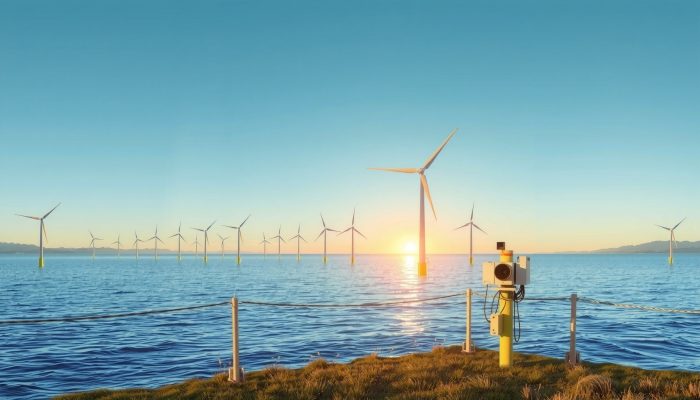
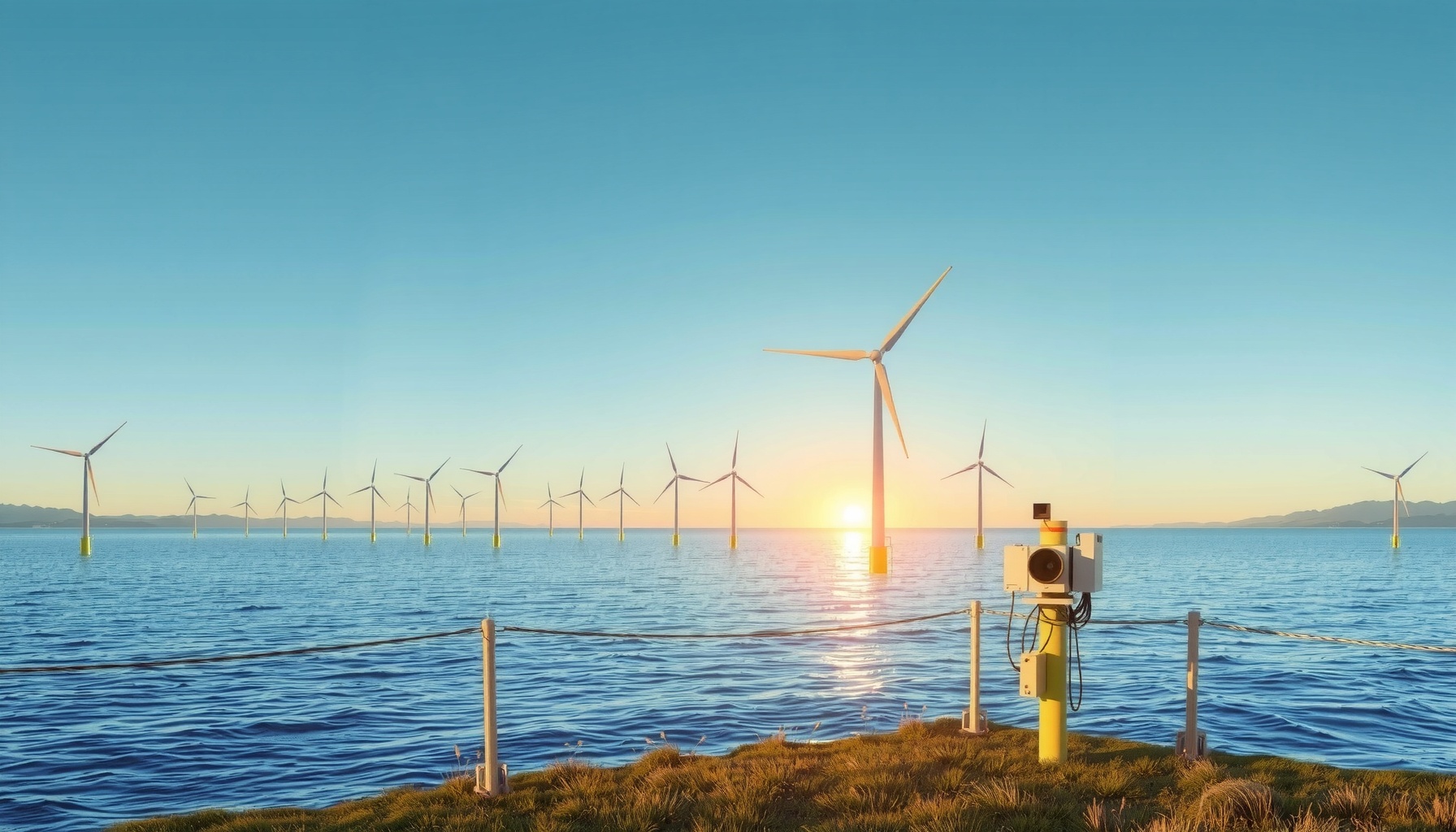
Regulation of offshore wind energy projects remains a significant subject as this renewable energy source expands. Recent data indicates that global offshore wind farm capacity has skyrocketed from 30 megawatts in early 2021 to nearly 33,000 megawatts.
Federal jurisdiction, facilitated by entities like BOEM and BSEE, plays a pivotal role in overseeing environmental compliance, project permitting, and the public interest review process.
States are now introducing innovative policies to advance energy infrastructure, making a grasp of the regulatory framework—highlighting requirements like environmental impact statements and NEPA compliance—absolutely essential.
Federal oversight and stakeholder consultation continue to shape the permitting process.
Recent shifts in jurisdictional authority, including the temporary withdrawal of offshore wind leasing opportunities, pose evolving challenges and opportunities.
As we move forward, examining lease agreements under OCSLA becomes crucial for ensuring environmental monitoring and regulatory alignment within these projects.
Lease Agreement Under OCSLA
Outer Continental Shelf Lands Act (OCSLA) provides a comprehensive legal framework for offshore wind lease agreements.
This act grants the federal government jurisdictional authority over the seabed, which is essential in ocean energy management.
Lease agreements under OCSLA demand rigorous environmental compliance, including environmental impact statement reviews and NEPA compliance, to uphold energy security and marine ecology considerations.
The BOEM and BSEE are the primary agencies responsible for project permitting, site evaluation, and stakeholder consultation. Their involvement ensures the lease approval process aligns with both energy production and ecosystem impact goals.
Project implementation challenges, particularly within state versus federal permitting dynamics, underscore the need for adaptive approaches and sustainability initiatives as offshore engineering projects progress in a complex regulatory landscape.
Key Components of Lease Agreements
- Environmental Assessment: Ensures alignment with the regulatory framework for ecosystem impact.
- Site Assessment Plan: Involves comprehensive evaluation to facilitate project financing and lease auction processes.
- Public Hearing: Part of the stakeholder consultation, promoting transparency and compliance with coastal zone management requirements.
Renewable energy targets are driving the shift towards more sustainable practices in energy transition. Projects must consider energy capacity, turbine technology, and energy grid integration. By acknowledging the significance of federal leasing processes, stakeholders can navigate project timelines and energy capacity challenges with informed strategies.
Lease agreements under OCSLA provide a fundamental basis for coordinated efforts in ocean resource management, supporting renewable portfolio standards, and advancing our collective goal of achieving a sustainable future.

Federal Jurisdiction in Offshore Wind Development
Federal jurisdiction shapes the advancement of offshore wind farms beyond state boundaries, influencing each step from lease agreement approval through comprehensive environmental compliance. Energy infrastructure evolves within the framework set by the Outer Continental Shelf Lands Act (OCSLA).
This law empowers the Bureau of Ocean Energy Management (BOEM) to manage leasing and licensing for commercial lease opportunities in federal waters, commencing three nautical miles from shore.
NEPA compliance is mandatory, introducing vital environmental impact statements that ensure projects meet high sustainability standards.
- OCSLA: Establishes guidelines for federal leasing, licensing, and site assessment plans.
- National Environmental Policy Act (NEPA): Demands federal oversight through comprehensive environmental reviews.
Jurisdictional authority provides clarity, mitigating disputes between regulatory bodies and expediting project permitting. This process supports investors and developers in bridging federal and state cooperation effectively, fostering a seamless project pipeline. Successful offshore wind farm implementation depends on this sophisticated collaboration between state jurisdiction over nearshore waters and federal governance offshore, ensuring productive energy production and efficient marine spatial planning.
Understanding Federal Jurisdiction in Offshore Wind
Navigating the maritime boundary is essential for effective offshore wind farm management and development. Several key legal frameworks govern these areas, ensuring that projects proceed smoothly. The cooperative efforts between federal and state bodies facilitate the seamless implementation of offshore projects and integrate renewable energy sources into the national energy grid.
- Maritime Boundary: Differentiates state from federal jurisdiction to streamline regulatory processes.
- Regulatory Framework: Legal structures that guide offshore wind development.
- State-Federal Cooperation: Coordination essential for project permitting and environmental compliance.
Strong jurisdictional clarity not only aids in the smooth progression of offshore wind projects but also ensures that stakeholder consultation and environmental policy adherence lead to a sustainable project timeline. Effective coordination between federal oversight and state jurisdiction is crucial for meeting renewable energy targets and energy security needs.
Federal Jurisdiction in Offshore Wind Development
- Federal jurisdiction extends beyond state boundaries, starting three nautical miles from shore.
- The Outer Continental Shelf Lands Act (OCSLA) empowers the Bureau of Ocean Energy Management (BOEM) to manage leasing and licensing in federal waters.
- NEPA compliance is essential for ensuring environmental sustainability in offshore wind projects.
- Effective state-federal cooperation is crucial for seamless project permitting and environmental compliance.
Introduction to Offshore Project Regulations
Regulation of offshore wind energy projects requires a multifaceted approach that weaves NEPA compliance with the Outer Continental Shelf Lands Act to foster responsible development. Offshore wind farm initiatives are on the rise, spurring federal oversight agencies, like the Bureau of Ocean Energy Management (BOEM), to enforce comprehensive environmental review frameworks.
National Environmental Policy Act (NEPA) serves as the backbone for environmental compliance, necessitating detailed analyses of potential ecosystem impacts, especially when federal jurisdiction and permits come into play.
As offshore wind resource utilization accelerates, NEPA review requirements for wind energy become pivotal for navigating regulatory frameworks and public interest reviews.
Collaboratively, the Outer Continental Shelf Lands Act complements NEPA’s mandate by adding layers to lease agreement structures and project permitting, establishing robust ocean resource management.
These policies advance renewable energy targets and protect marine ecology amid the expansion of energy infrastructure. Transitioning from regulations, the next section will detail NEPA compliance procedures and the function of the Environmental Impact Statement.
NEPA Compliance and Environmental Impact Statement
NEPA compliance is a cornerstone of offshore project permitting and emphasizes the importance of site evaluation and stakeholder consultation.
Environmental compliance commences with a preliminary review to assess whether a full environmental impact statement (EIS) is necessary, paving the way for public hearing opportunities and agency coordination.
- The comprehensive EIS addresses project-specific ecosystem impact risks, proposing mitigation strategies reinforced by marine spatial planning and environmental assessment data.
- With input from the coastal zone management process integrated, the final EIS informs federal regulation decisions and secures necessary lease agreements.
Complex regulatory framework hurdles, such as extended timelines and overlapping state jurisdiction, often emerge. Successes, like the Vineyard Wind project, highlight how federal leasing process coordination and public interest review can advance NEPA compliance to enable commercial-scale energy production. Federal oversight continues to evolve, adapting to stakeholder needs and renewable portfolio standards.
Offshore Project Regulations
- Offshore wind energy projects require compliance with NEPA and the Outer Continental Shelf Lands Act.
- NEPA compliance involves detailed environmental impact analyses to protect ecosystems.
- The Bureau of Ocean Energy Management (BOEM) enforces environmental review frameworks for offshore projects.
- Successful projects like Vineyard Wind demonstrate the importance of federal leasing coordination and public interest reviews.
Offshore Wind Farms and Their Role in Coastal Zones
Offshore wind farm projects involve extensive lease agreements and are subject to federal jurisdiction, impacting coastal environments significantly. The development of such energy infrastructure often begins with a comprehensive environmental impact statement.
This document addresses the potential effects of wind turbine installation, aiming to balance coastal zone management and public interest review.
Analyzing Environmental Effects
Offshore wind resources influence the ecology of coastal zones.
Building these farms involves turbine technology, which can impact marine ecology by altering seabed rights and ocean resource management. The construction phase, including seabed mapping and site assessment plans, might disrupt marine habitats.
Noise pollution and sediment displacement are key concerns highlighted in environmental assessments.
Regulatory Framework and Compliance
Federal oversight ensures that offshore wind projects adhere to stringent environmental compliance measures.
This includes assessing impacts through NEPA compliance and addressing them via marine spatial planning.
Stakeholder input during public hearings plays a critical role in shaping project permitting and the overall regulatory framework.
Case Studies and Mitigation Strategies
Case studies, such as those conducted near Morro Bay, reveal that offshore projects can reduce upwelling and nutrient flow. Adaptive management and continuous environmental monitoring help mitigate these effects.
Incorporating sustainability initiatives during project evaluation is crucial for energy grid integration and maintaining energy security.
Impact on Marine Life and Ecosystems
Although ecosystem impact is inevitable with such development, renewable energy targets prioritize minimizing harm.
The artificial reefs formed around turbine foundations can enhance habitat for species like cod.
This dual effect demands ongoing coastal development evaluations to ensure harmony between energy production and marine safety.
Offshore Wind Farms
- Offshore wind farms require comprehensive environmental impact statements to evaluate their effects on coastal environments.
- Federal oversight and NEPA compliance are essential for ensuring environmental compliance in offshore wind projects.
- Case studies demonstrate that offshore projects can impact marine ecosystems, such as reducing upwelling and nutrient flow.
- Artificial reefs around turbine foundations can enhance habitats for marine species, contributing to ecosystem benefits.
Introduction to Wind Energy Projects and Public Interest
Wind energy stands at the forefront of the renewable energy transition, offering a sustainable solution to growing global energy demands. Introduction of large-scale wind energy projects relies on more than just technical feasibility; it hinges on serving the public interest and meeting rigorous sustainability standards.
Community involvement and stakeholder consultation help ensure that these developments benefit society and minimize local impacts.
Regulation of offshore wind energy projects through federal oversight and careful consideration of environmental compliance fosters responsible, eco-friendly deployment.
Moving forward, a deeper exploration of public interest review processes will highlight how these principles shape project success.
Public Interest Review for Wind Energy Projects
Ensuring the public interest is a critical component of successful wind energy project development. This encompasses social equity, environmental stewardship, and economic development.
Regulatory frameworks, like the NEPA review requirements, guide project evaluation by mandating thorough analyses of environmental impact statements and project permitting standards. Stakeholder consultation plays a pivotal role, where local communities, environmental groups, and industry experts participate through public hearings and discussions.
Past offshore wind farm proposals often undergo modifications as a result of public input.
Adjustments to turbine technology and site evaluation processes have been made to address concerns over impacts on marine ecology and energy infrastructure.
As regulatory bodies conduct these reviews, they ensure that community voices are heard and integrated into project development.
This approach helps achieve fair, transparent, and effective energy transition outcomes.
Wind Energy Projects
- Wind energy projects are essential for the renewable energy transition, addressing global energy demands sustainably.
- Community involvement and stakeholder consultation are crucial for minimizing local impacts and ensuring societal benefits.
- Regulatory frameworks like NEPA review requirements guide project evaluations through environmental impact analyses.
- Public input often leads to modifications in offshore wind farm proposals, addressing concerns about marine ecology and infrastructure impacts.
Installation Process of Wind Turbines
Establishing a modern offshore wind farm requires navigating federal jurisdiction and a structured installation process. This process balances technological innovation with environmental compliance and regulatory mandates, ensuring seamless integration into the energy infrastructure.
The installation begins with a thorough site evaluation to assess wind resource potential and conduct an environmental impact statement.
Site Selection and Preparation
Meticulous preparation is essential to ensure project permitting aligns with federal oversight and marine spatial planning.
- Stakeholder consultation and public interest review are conducted to address concerns and secure a lease agreement.
- Compliance with NEPA and environmental policy is ensured by conducting a comprehensive environmental assessment.
- Developing a site assessment plan guarantees coastal zone management and effective ocean resource management.
Foundation Construction and Technology Integration
Once site preparations are completed, foundation construction for turbine technology begins, securing seabed rights for stability.
- Advanced technology facilitates precise offshore engineering and efficient energy production.
- Execution of transportation logistics streamlines the delivery of large components.
Installation and Energy Grid Integration
The final phase emphasizes energy grid integration and rigorous testing. Transmission lines are laid to connect with the grid, reinforcing energy capacity and security.
- Final inspections ensure marine safety and compliance with renewable portfolio standards.
- Post-installation environmental monitoring tracks ecosystem impact and sustainability initiatives.
Coordination across all stages is key to successful project completion, balancing economic interests with the public hearing process to meet renewable energy targets.
Wind Turbine Installation
- Offshore wind farms require federal jurisdiction navigation for installation.
- Site evaluation includes assessing wind resource potential and conducting environmental impact statements.
- Foundation construction secures seabed rights for turbine stability.
- Energy grid integration involves laying transmission lines to reinforce capacity and security.
Introduction and Importance
Regulation of offshore wind energy projects takes center stage as global leaders seek to accelerate renewable integration across energy infrastructure. Outer Continental Shelf Lands Act leasing/licensing frameworks are now instrumental in transforming the permitting landscape for grid expansion.
Across modern economies, energy infrastructure resilience is essential, supporting everyday commerce and societal well-being.
Renewable energy sources, such as offshore wind farm developments and advanced wind turbine installation, are at the forefront of this energy transition.
Challenges remain in rapidly modernizing transmission lines, but strategic lease agreement processes and sustainability initiatives reveal significant opportunities. As the discussion moves forward, understanding pathways for integrating wind power and navigating associated regulatory frameworks becomes increasingly crucial.
Next, we examine the specifics of Navigating Energy Infrastructure and Transmission Lines to better understand integration, oversight, and innovative solutions that shape the sector.
Navigating Energy Infrastructure and Transmission Lines
The path to integrating offshore wind farms into existing infrastructure unveils numerous opportunities and hurdles.
NEPA review requirements for wind energy figure prominently when incorporating wind farms into established transmission networks. Coastal zone management and robust energy grid integration strategies aim to connect renewable energy sources, like offshore wind farm sites, to areas with high electricity demand.
Overcoming Scalability Challenges
Scalability challenges arise as transmission lines must stretch across multiple regions, facing complex environmental impact statement processes.
State versus federal permitting processes for wind projects highlight coordination hurdles when new lines cross state boundaries, necessitating extensive stakeholder consultation and public interest review at each regulatory level.
Federal Oversight and Technological Solutions
Federal oversight, through policies such as the Outer Continental Shelf Lands Act and evolving regulatory frameworks, aligns project permitting with energy transition goals.
Technological advances, including smart grid innovations and power purchase agreements, streamline energy capacity deployment and improve system resilience.
These advancements are pivotal for infrastructure expansion to meet regulatory standards and environmental compliance.
- Regulation of offshore wind energy projects is crucial for accelerating renewable integration across energy infrastructure.
- Outer Continental Shelf Lands Act leasing/licensing frameworks play a key role in transforming the permitting landscape for grid expansion.
- Scalability challenges in transmission lines require extensive stakeholder consultation and public interest review at state and federal levels.
- Federal oversight and technological advances, such as smart grid innovations, are essential for aligning project permitting with energy transition goals.
Federal Oversight in Ocean Energy Management
The Bureau of Ocean Energy Management (BOEM) is pivotal in navigating the intricate regulatory frameworks that govern ocean energy projects. Federal jurisdiction encompasses energy infrastructure on the Outer Continental Shelf, where BOEM and the Federal Energy Regulatory Commission (FERC) oversee lease agreements, project permitting, and environmental compliance.
These responsibilities are guided by statutory directives such as the Outer Continental Shelf Lands Act and the National Environmental Policy Act (NEPA) review process.
.
Public interest review mechanisms are crucial for ensuring transparent decision-making.
This involves striking a balance between energy production and minimizing ecosystem impact. As offshore wind farm technologies advance and marine spatial planning strategies evolve, federal policies adjust to reflect a commitment to sustainable and responsible ocean energy management.
.
Stakeholder consultation plays a significant role in shaping these policies, which now incorporate updated environmental impact statement requirements. These dynamic regulations highlight how federal oversight continuously adapts to both innovation and growing environmental awareness.
Key Aspects of Federal Oversight
- Lease Agreements: Establish the terms for utilizing ocean space for energy projects.
- Project Permitting: Ensure compliance with environmental and safety standards.
- Environmental Compliance: Adhere to obligations under various federal acts to protect marine environments.
Federal regulation not only supports energy development but also safeguards marine ecosystems, demonstrating an effort to align resource utilization with conservation efforts.
Federal Oversight in Ocean Energy Management
- The Outer Continental Shelf Lands Act provides the legal framework for managing offshore energy resources.
- The National Environmental Policy Act (NEPA) ensures environmental considerations are integrated into federal decision-making processes.
- Stakeholder consultation is essential for developing policies that balance energy needs with environmental protection.
- Advancements in offshore wind technologies influence the evolution of federal policies and regulations.