
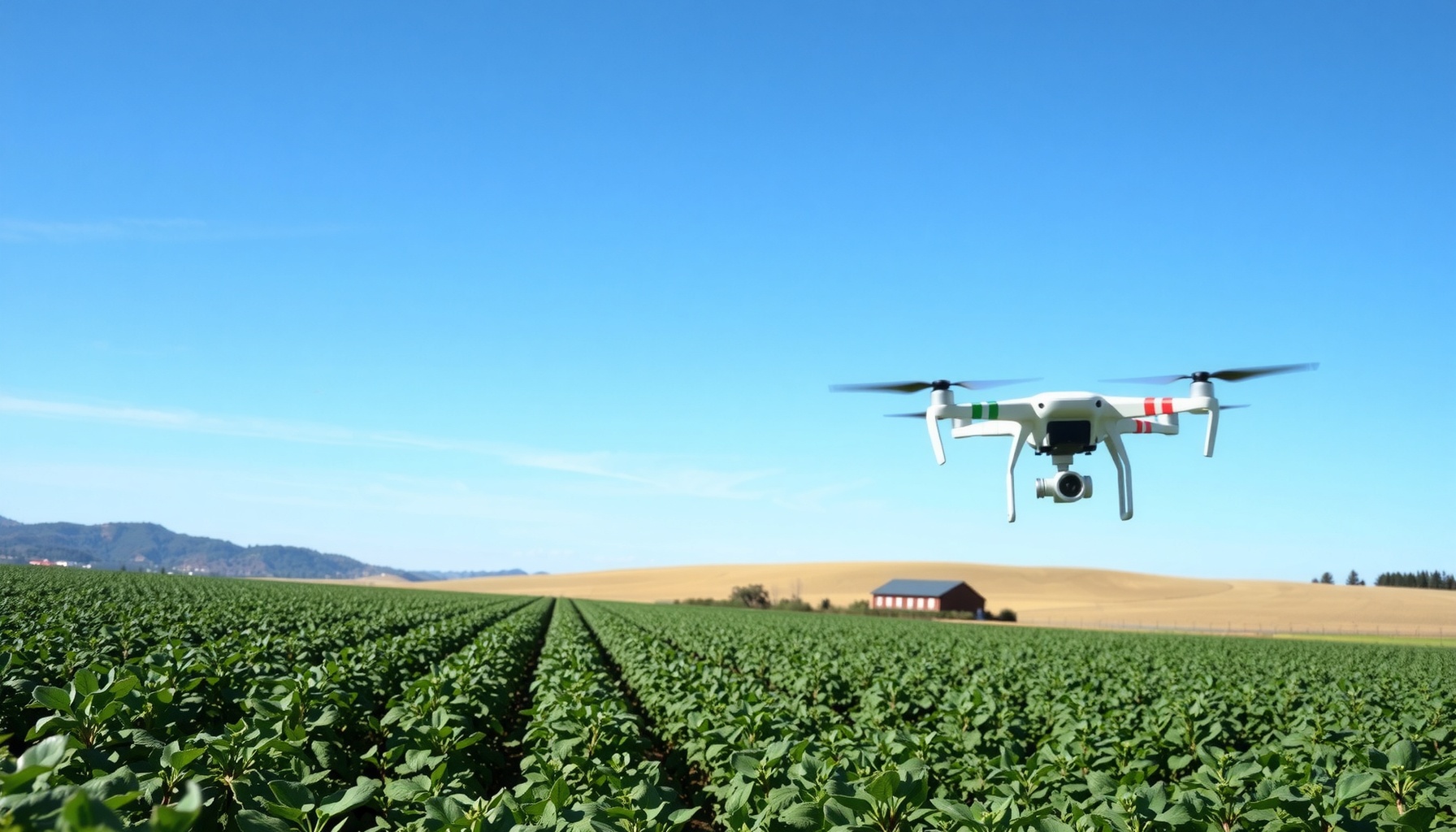
Drone use in agricultural surveying is revolutionizing farm management by providing real-time field data through advanced UAV technology. Precision agriculture capitalizes on these digital tools for tasks such as crop monitoring, yield estimation, and soil analysis, outperforming the speed and cost-efficiency of traditional surveys.
Unmanned aerial vehicles (UAVs) soar over fields, collecting information using multispectral imaging and thermal sensors.
This enables efficient pest detection and irrigation planning.
Dive into the world of digital agriculture to see how it reshapes conventional farm surveying. Up next, we delve into the intricacies of FAA regulations for agricultural drones.
FAA Regulations for Agricultural Drones
FAA regulations for commercial drones establish the framework governing the utilization of agricultural drones across the United States.
These regulations impact a range of applications, from aerial survey to crop spraying.
- Privacy considerations and environmental impact: Rules are crafted to safeguard privacy during farm surveillance and data collection. These standards advocate for sustainable farming by regulating aerial application and resource management.
Significant regulatory changes now bolster precision agriculture by enabling more expansive flight operations and sophisticated flight planning. This evolution is coupled with newly streamlined pilot certification processes, which require a solid understanding of geographic information systems and regulatory compliance. To stay informed about policy shifts, consider subscribing to FAA drone updates or participating in precision agriculture forums. This proactive engagement helps keep pace with the ever-evolving standards in digital agriculture.
Pilot Certification Requirements for UAVs
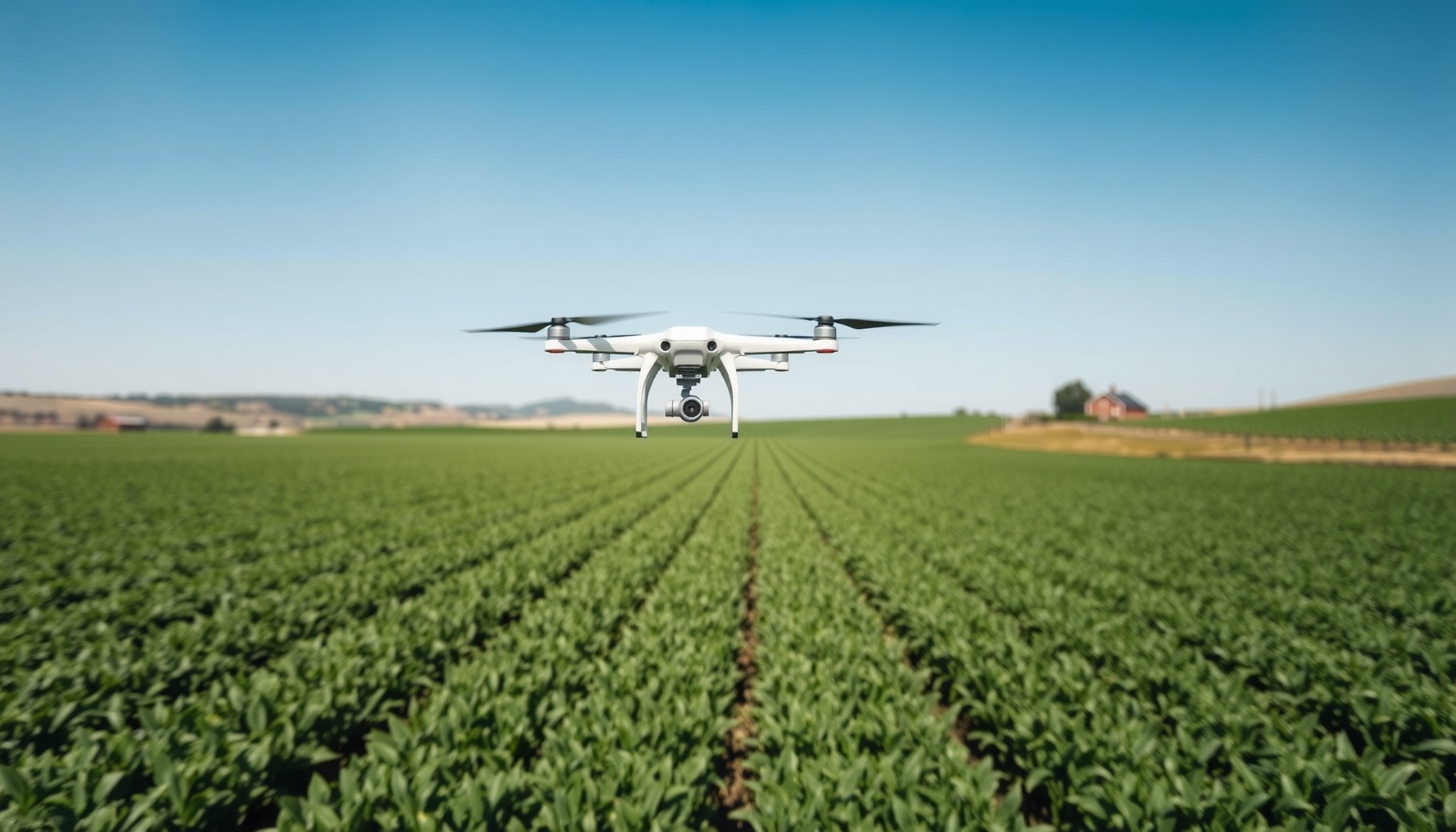
Pilot certification in agriculture equips operators of unmanned aerial vehicles (UAVs) with the essential skills to adhere to FAA regulations for commercial drones while executing precise crop monitoring techniques. Future pilots must fulfill requirements such as being at least 16, proficient in English, and passing the aeronautical knowledge exam, covering regulatory compliance, airspace, and weather monitoring.
Aerial imaging and sustainable farming greatly benefit from certified pilots, who enhance flight planning and remote sensing for sustainable crop monitoring.
Legal certifications ensure effective field data analysis, benefiting overall agricultural technology application and crop monitoring.
Practical exam preparation is crucial, with strategies like studying official FAA materials, participating in online training, and practicing real-world UAV technology scenarios.
These measures bolster exam performance and ensure compliant operation within UAV technology regulations.
Transitioning forward, the understanding of these certifications is pivotal as we explore how they intersect with privacy issues in drone farming.
Privacy Issues in Drone Farming
Privacy considerations in agricultural drones are increasingly intricate as precision agriculture technology expands data collection capabilities during crop monitoring.
Farm management faces the challenge of balancing digital agriculture advancements with privacy rights.
Relevant laws: U. S. FAA Part 107 and EU GDPR set operational boundaries that pilots must navigate to ensure regulatory compliance without infringing on privacy.
Geospatial analysis requires a careful approach where farm managers routinely assess data collection practices, maintaining respect for landowner rights and preventing unauthorized surveillance.
Pilots should employ geofencing within suitable drone software to restrict flight paths and minimize inadvertent data capture.
As UAV technology continues to evolve, operators must stay informed on changing privacy legislation, ensuring sustainable farming coexists with personal privacy and community standards.
UAV Certification and Privacy
- Pilot certification for UAVs in agriculture includes passing the aeronautical knowledge exam.
- Certified pilots improve flight planning and remote sensing for sustainable farming.
- FAA Part 107 and EU GDPR laws guide UAV operations to balance technology use with privacy rights.
- Geofencing in drone software helps prevent unauthorized data capture and respects landowner rights.
Environmental Impact of Drone Use
Drone technology is revolutionizing sustainable farming by enabling precise crop analysis through real-time remote sensing. Unmanned aerial vehicles not only facilitate better farm management but also enhance soil and crop health by optimizing resource use.
Sustainable farming practices are significantly benefiting from technologies that concentrate on reducing chemical input and safeguarding water systems from contamination.
- Soil analysis through UAV technology aids in erosion monitoring, crucial for sustainable resource management and vegetation health.
- Promoting battery recycling and selecting drones with eco-friendly materials help mitigate electronic waste, ensuring drones’ environmental sustainability.
Precision agriculture methodologies ensure efficient allocation of water, fertilizers, and pesticides, favoring aerial imaging and field surveying to promote environmental conservation.
Next: Precision Agriculture with Drones.
Precision Agriculture with Drones
Precision farming leverages multispectral imaging and UAV technology for enhanced crop monitoring, providing farmers with essential site-specific insights.
Advancements in agricultural technology, including AI-driven data collection and GIS mapping, foster improved irrigation planning while minimizing chemical dependencies, thus supporting sustainable farming and environmental impact reduction.
- As field surveillance and realtime data expand, privacy considerations must be addressed through stringent regulatory compliance.
- Starting with small-scale drone integrations can lead to effective agribusiness programs, focusing on local needs while promoting drone safety and environmental awareness.
Data-driven adaptations in farming help maintain efficiency, uphold environmental responsibilities, and embrace advancements in digital agriculture.
Drone Use in Agriculture
- Drone technology enhances sustainable farming by providing precise crop analysis.
- UAVs contribute to better farm management and soil health optimization.
- Using eco-friendly drones and promoting battery recycling reduce electronic waste.
- Precision agriculture with drones ensures efficient resource allocation, promoting environmental conservation.
Enhancing Crop Monitoring with UAVs
Drone use in agricultural surveying revolutionizes farm management by enhancing precision agriculture techniques. Integrating unmanned aerial vehicles with advanced flight planning and multispectral imaging enables targeted pesticide application.
This results in reduced chemical runoff, preserving soil and minimizing environmental impact.
UAV technology ensures improved crop health monitoring and efficient irrigation planning.
By utilizing geofencing, farm managers can protect crop monitoring data within defined boundaries.
Optimizing UAV Deployment
Flight planning plays a significant role in optimizing UAV deployment for crop analysis. By rotating flight paths seasonally, growers can capture growth variability, enhancing the accuracy of yield estimation and supporting sustainable farming practices.
Weather monitoring and GIS mapping also contribute to efficient UAV operation, providing insights for better resource management.
How Remote Sensing Aids Farming
Remote sensing technologies provide crucial insights into crop monitoring and field variability, greatly aiding agribusiness. Real-time data collected through aerial imaging transforms field surveying by identifying crop health issues early.
Advances in NDVI analysis and thermal imaging further support precision agriculture by offering detailed spatial data on vegetation health and plant stress.
Integrating Remote Sensing Data
Digital agriculture platforms benefit from integrating high-resolution remote sensing data, enabling effective irrigation planning and variable rate application.
To enhance farm efficiency, synchronize UAV data collection with ground sensors.
This ensures comprehensive spatial data usage in farm management strategies, extending the benefits observed in field analysis through aerial survey techniques.
By combining remote sensing with UAV technology, farms achieve improved crop analysis and enhanced environmental monitoring, leading to sustainable farming advancements.
Precision agriculture techniques continue to evolve with the integration of advanced agricultural technology, ensuring that farms remain resilient and productive.
UAVs and Remote Sensing in Agriculture
- Drone use in agricultural surveying enhances precision agriculture techniques.
- Integrating UAVs with multispectral imaging enables targeted pesticide application.
- Remote sensing technologies provide crucial insights into crop monitoring and field variability.
- Synchronizing UAV data collection with ground sensors enhances farm management strategies.
Sustainable Farming through Aerial Imaging
Precision agriculture is revolutionized by the integration of unmanned aerial vehicles and advanced remote sensing technologies. These techniques allow farmers to monitor vegetation health and optimize crop rotation strategies while ensuring regulatory compliance and addressing privacy considerations.
Aerial imaging empowers farm management by providing accurate spatial data without compromising landowner privacy or violating FAA regulations.
Innovative Techniques and Sustainability
Modern agricultural technology utilizes multispectral imaging and NDVI analysis to enhance sustainable farming.
These tools facilitate better water conservation and enable efficient soil analysis, contributing to sound resource management. In addition, geofencing and encrypted data transmission provide reliable solutions for improving imaging accuracy while safeguarding sensitive spatial data.
Recommendations for Improved Imaging Accuracy
To further enhance aerial imaging, implementing innovative drone software and flight planning techniques is recommended. These advancements will allow for more accurate GIS mapping and detailed terrain modeling.
Leveraging weather monitoring and thermal imaging can provide real-time data critical for precise field surveying and effective environmental monitoring.
| Technology | Benefits |
|---|---|
| Unmanned Aerial Vehicles | Monitor vegetation health and optimize crop rotation |
| Multispectral Imaging | Enhances sustainable farming and water conservation |
| NDVI Analysis | Facilitates efficient soil analysis and resource management |
| Drone Software | Improves GIS mapping and terrain modeling |