
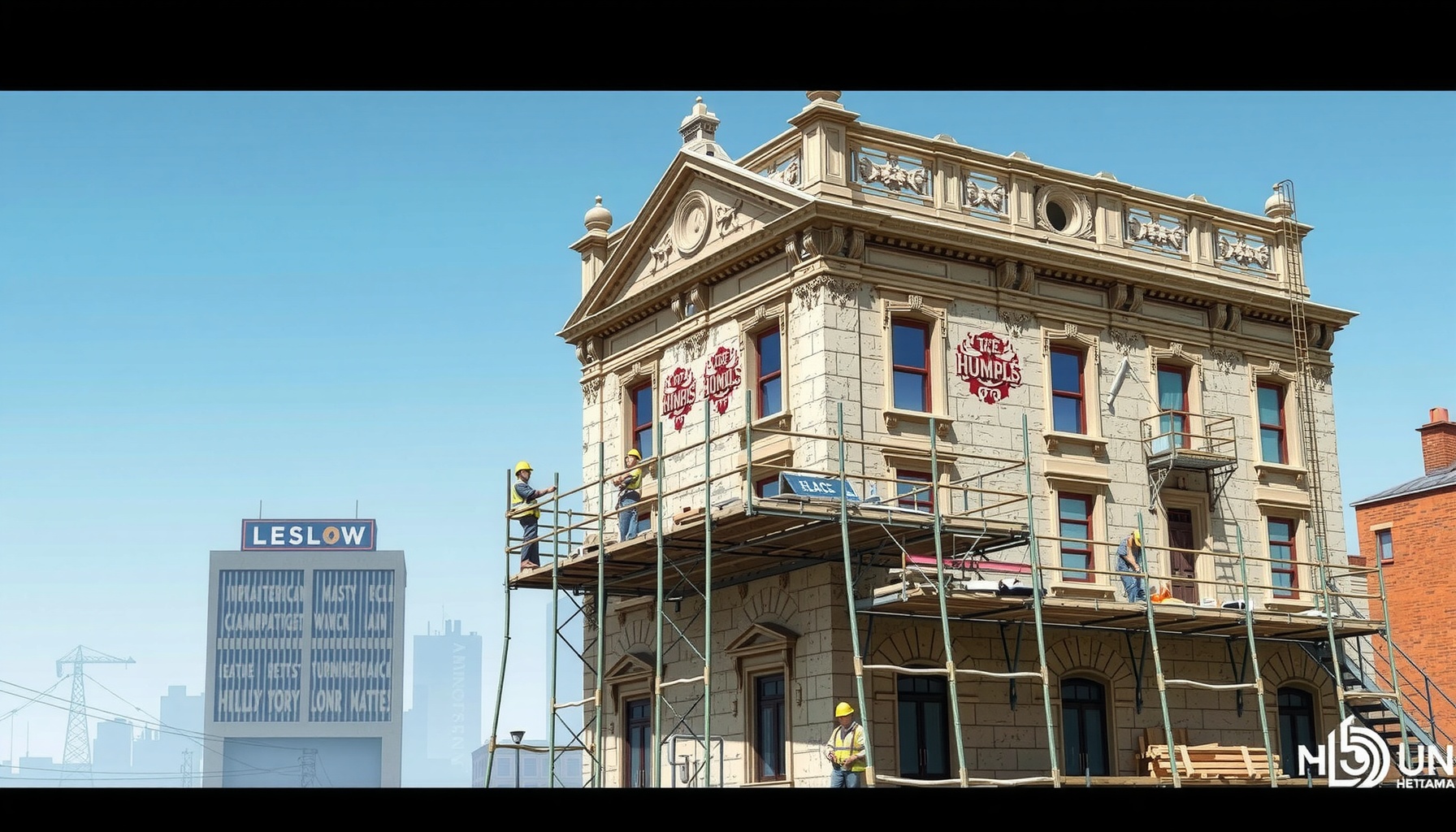
Adaptive reuse projects breathe new life into historical architecture, but each transformation must navigate a maze of compliance guidelines and preservation law requirements. Zoning laws, historic preservation ordinances, and accessibility standards play pivotal roles in how your favorite landmark could be modernized without losing cultural value.
When planning an adaptive strategy, property owners must weigh the benefits of contemporary upgrades against the mandates of building conservation and design reviews enforced by local preservation commissions.
As you explore innovative ways to repurpose cherished structures, consider how preservation advocacy shapes both the opportunities and constraints in site rehabilitation.
Preservation Law Requirements Explained
Landmark designations fundamentally shape building adaptation, often triggering oversight by a local architectural review board to uphold conservation standards. Preservation law frameworks—including the National Historic Preservation Act and local ordinances—define which historical property adaptation proposals require renovation permits or planning commission approval.
Compliance guidelines stress early engagement with authorities and a thorough documentation process to ensure code compliance, streamlining the building permit process. Preservation law also highlights pitfalls such as missing deadlines for permits or underestimating restoration funding needs; strategic planning and expert consultation mitigate these risks for a successful adaptive reuse.
Legal Implications of Achieving Landmark Status
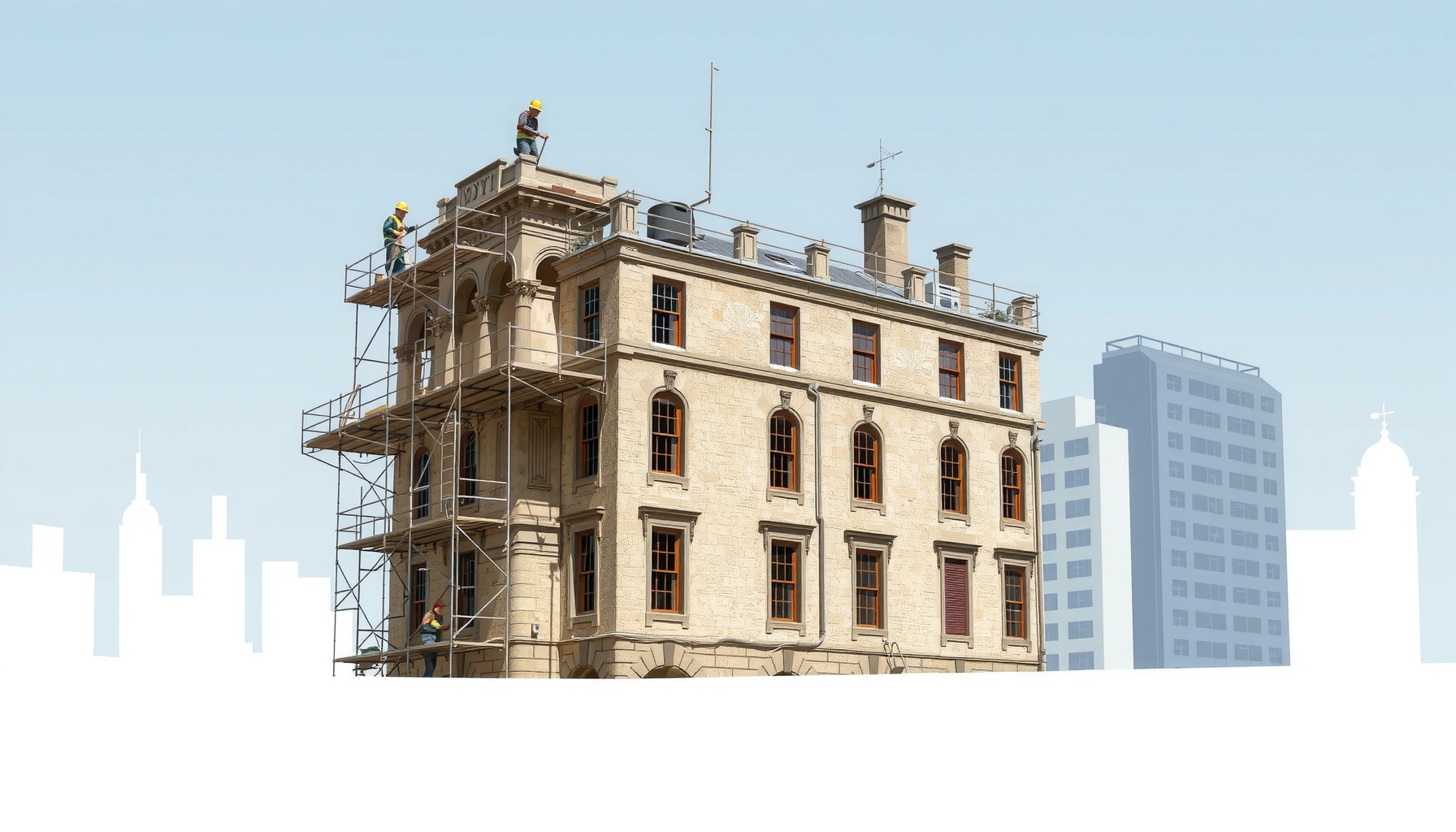
Adaptive reuse of historic buildings requires navigating a landscape of complex legal considerations. These factors significantly influence how owners and developers approach projects involving both preservation incentives and extensive heritage conservation.
State Historic Preservation Offices play a pivotal role by reviewing nominations while examining criteria like architectural integrity, building retrofit compatibility, and the property’s overall significance under established preservation law requirements.
Zoning variance and compliance guidelines are crucial.
Local landmark status often necessitates obtaining planning approval from both an architectural review board and a planning commission. Adaptive reuse strategies developed for maintaining historic districts must delicately balance building adaptation with precise code compliance, ensuring that renovations strictly adhere to conservation standards while simultaneously supporting community development plans and cultural resource management.
Landmark Designation and Its Impacts
Historic tax incentives play a transformative role in property redevelopment, offering significant financial relief that makes landmark designation an attractive proposition for owners targeting building conservation and seeking restoration funding. The legal considerations of adaptive reuse for historic buildings are closely linked to accessing valuable tax credit programs, secured through renovation permits.
This process paves the way for adaptive policy and site rehabilitation, which are necessary for sustainable, long-term preservation.
Heritage protection at both state and local levels results in enhanced property values, strengthening neighborhood identity.
The well-established preservation criteria serve as a valuable tool for cultural resource management. Community-led advocacy for heritage conservation further promotes sustainable economic growth and architectural heritage stewardship, while reinforcing the social and financial benefits inherent in maintaining historic districts.
Legal Implications and Landmark Designation
- Adaptive reuse of historic buildings involves legal considerations influencing preservation incentives and heritage conservation.
- State Historic Preservation Offices are key in reviewing nominations, focusing on architectural integrity and retrofit compatibility.
- Historic tax incentives provide financial relief, making landmark designation attractive for building conservation and restoration funding.
- Heritage protection enhances property values, strengthens neighborhood identity, and supports sustainable economic growth.
Navigating Historic Tax Incentives
Adaptive reuse of historic buildings is significantly driven by the strategic use of historic tax incentives. These incentives bolster private investment while promoting historic preservation and strengthening local economic frameworks.
A tax credit of 20% available against qualified rehabilitation expenses is a powerful motivator for property owners to pursue building retrofit projects, thus upholding the architectural integrity of these structures.
Strategies for Maximizing Financial Benefits
To fully capitalize on preservation incentives, property owners must adhere to specific compliance guidelines.
Close collaboration with preservation experts can ensure these conservation standards are met effectively.
Reviewing planning commission guidelines is also critical to align with building ordinance regulations. Many find it beneficial to partner with expert consultants to enhance their understanding of these requirements.
- Partnering with qualified consultants boosts the potential for maximizing benefits and securing necessary approvals.
- Thorough research into both local and federal programs ensures a full grasp of eligibility requirements, preparing applicants for pertinent zoning laws and any compliance guidelines that may arise during the process.
- Application challenges often surface due to the intricate interpretations of legal requirements and complexities in planning approval processes. Engaging in proactive communication with relevant agencies can significantly ease this aspect of the journey.
Overcoming Challenges in the Application Process
Applicants may encounter obstacles when interpreting code compliance or navigating the intricacies of zoning regulation. Devising a strategic reuse strategy and seeking guidance from the architectural review board can aid in overcoming these hurdles. Successfully maneuvering through these challenges ensures a seamless transition into additional discussions on program compliance in the following sections.
Historic Tax Incentives
- Historic tax incentives encourage the preservation of architectural heritage.
- A 20% tax credit can significantly reduce the costs of rehabilitation projects.
- Compliance with conservation standards is essential to qualify for incentives.
- Expert consultants can help navigate complex zoning laws and application processes.
Understanding Zoning Laws and Preservation
Adaptive reuse plays a pivotal role in blending historic preservation with urban revitalization. Zoning laws often form a complex backdrop, influencing how cultural landmarks are integrated into contemporary settings.
These laws must navigate between preservation incentives and compliance guidelines, posing challenges to building adaptation efforts.
As a result, understanding these regulations is essential for conservation standards and heritage protection.
Zoning Variance Procedures Simplified
Zoning laws serve as gatekeepers for historic preservation, shaping how cultural landmarks blend into modern urban revitalization projects.
Preservation law requirements can present obstacles when adaptive reuse or building adaptation is considered, as original zoning ordinances may not permit new functions or structural retrofits. In these cases, requesting a zoning exception through formal variance procedures is the primary legal means to ensure compliance while preserving historical property adaptation and maintaining community character.
- Cultural resource management strategies depend on such variances to preserve architectural integrity while enabling flexible development within heritage site designation areas.
- Obtaining a zoning variance starts by understanding local ordinance requirements and gathering documentation for your application, with clear justification of how the project meets conservation standards.
- Engage stakeholders and the community for support before formally submitting your application to the planning commission or zoning board.
- Following these zoning variance procedures fosters property repurposing without undermining landmark designation impacts or historical asset management goals.
Zoning and Preservation
- Adaptive reuse is crucial for integrating historic preservation with urban revitalization.
- Zoning laws often dictate how cultural landmarks can be adapted for modern use.
- Obtaining a zoning variance is essential for projects that aim to adapt historic buildings for new functions.
- Engaging community support is important when applying for a zoning variance.
Introduction to Cultural Resource Management
Legal considerations for adaptive reuse of historic buildings frequently set the framework for how modern development interacts with the integrity of our built environment. Adaptive reuse initiatives often raise important questions: How can a city grow responsibly while respecting its existing heritage? As noted by leading preservation advocates,
“Preserving cultural identity through thoughtful redevelopment ensures history remains part of our future. ”
Cultural resource management plays a crucial role in ensuring regulatory compliance, meeting preservation law requirements, and observing local ordinances, safeguarding not only historical artifacts but also the identity of communities.
- Maintains urban revitalization efforts by protecting valuable heritage assets
- Guides property redevelopment through landmark protection and community participation
- Influences local culture through architectural review board recommendations and adaptive strategy
Next, we examine how these frameworks evolve in cultural resource management itself, forming the core of sustainable heritage protection and smart growth.
Understanding Cultural Resource Management
The intricate interplay of adaptive reuse and historic preservation laws forms the essence of effective cultural resource management. Essential compliance guidelines are set, ensuring that all project stakeholders, including government agencies, archaeologists, historians, and local communities, adhere to these heritage protection standards.
Engaging Key Stakeholders
Community support initiatives foster deeper civic engagement by involving residents in site-specific mitigation, reinforcing both cultural awareness and protective stewardship of heritage sites.
- Promotes historic preservation through partnership and ongoing dialogue
- Encourages sustainable property repurposing in compliance with zoning regulations
- Enhances architectural integrity while strengthening urban identity
Preservation advocacy and coordinated approaches underlie successful heritage site designation and exemplify the real-world impact of robust resource management practices. Through adaptive policy and historic tax incentives, architectural preservation efforts continue to thrive, maintaining a city’s unique cultural landscape.
Cultural Resource Management
- Adaptive reuse initiatives help cities grow while preserving heritage
- Cultural resource management ensures compliance with preservation laws
- Community involvement enhances the protection of heritage sites
- Historic preservation laws guide sustainable property repurposing
The Role of Architectural Integrity in Modern Projects
Adaptive reuse and the legal landscape surrounding historic preservation have significantly influenced urban revitalization practices worldwide. These laws determine everything from restoration funding to planning approval, aligning with conservation standards that emphasize maintaining a building’s original design, materials, and context.
Consequently, preserving architectural integrity becomes an essential goal in heritage protection and adheres to the adaptive policy framework.
By prioritizing preservation, urban revitalization initiatives retain cultural identity, meet zoning laws, and comply with conservation standards.
How Does Architectural Integrity Affect Projects?
Architectural integrity serves as the cornerstone of effective historic preservation, ensuring the authentic character of buildings is maintained. This integrity is essential in cultural resource management and directly impacts compliance guidelines for building retrofit projects.
Maintaining these standards often involves navigating renovation permits, structural rehabilitation processes, and adherence to heritage conservation criteria set by the planning commission and architectural review boards.
Preservation incentives play a significant role in promoting the adherence to conservation law, motivating developers to engage in heritage status evaluations and secure preservation grants.
Successful property reuse strategy hinges on careful planning and code compliance, which are vital in preserving the historical essence of structures.
During renovations, use conversion should be approached thoughtfully to align with rehabilitation incentives and avoid compromising site rehabilitation.
Compliance with zoning regulations, such as building ordinance and zoning law adjustments, ensures the project’s alignment with the local landmark status and promotes urban revitalization through sustainable practices.
Architectural Integrity
- Adaptive reuse and historic preservation laws influence urban revitalization practices globally.
- Architectural integrity ensures the authentic character of buildings is maintained in historic preservation.
- Preservation incentives encourage adherence to conservation law and support heritage status evaluations.
- Successful property reuse strategy depends on careful planning and compliance with zoning regulations.
Introduction to Building Retrofits
Legal considerations for adaptive reuse of historic buildings are fundamental as property owners pursue building retrofit projects to preserve the distinctive legacy of historic architecture while achieving modern standards of safety and efficiency. Upgrading existing structures not only ensures compliance with updated conservation standards but enhances their value and livability in fast-changing cities.
By implementing heritage protection strategies, retrofitting projects significantly contribute to urban revitalization and sustainability, reducing energy usage and carbon emissions.
Forward-thinking initiatives align compliance guidelines with historic preservation objectives, demonstrating how innovation in historical property adaptation supports thriving, sustainable communities while respecting cultural resource management.
Compliance guidelines, we’ll further explore steps and challenges in retrofitting historic properties.
Compliance Guidelines for Building Retrofits
Preservation law requirements shape every phase of an adaptive reuse project, demanding that stakeholders prioritize architectural integrity, safety, and regulatory alignment. Essential early steps include conducting a heritage status evaluation, securing renovation permits, and coordinating with the planning commission or architectural review board to address compliance guidelines and landmark designation impacts.
Integrating energy-efficient solutions supports both sustainability goals and strict code compliance. Common compliance challenges, such as interpreting zoning laws, navigating the building permit process, or leveraging tax credit programs, can be addressed by seeking expert advice and accessing local incentive programs.
This careful balance between building adaptation and regulatory compliance enables sustainable retrofitting outcomes, positioning preservation advocacy at the heart of modern development strategies.
Key Compliance Steps
Adaptive reuse initiatives begin with a comprehensive heritage status evaluation.
A thorough assessment ensures historical integrity is maintained while allowing for necessary updates.
Securing the appropriate renovation permits is crucial, followed by close collaboration with the planning commission and architectural review board. This ensures all compliance guidelines and potential landmark designation impacts are fully addressed.
Sustainability and Compliance
Integrating energy-efficient solutions into retrofitting projects not only meets sustainability goals but also adheres to strict code compliance.
Through innovative design and technology, stakeholders can reduce energy consumption and carbon emissions. This aligns closely with urban revitalization objectives and supports heritage protection.
Common Compliance Challenges
Addressing compliance challenges begins with understanding zoning laws and navigating the building permit process.
Engaging with local incentive programs, such as historic tax incentives and preservation grants, can offset costs associated with these endeavors.
Expert advice is invaluable for interpreting complex regulations and ensuring successful project outcomes.
- Adaptive reuse of historic buildings is essential for preserving architectural heritage while meeting modern safety and efficiency standards.
- Compliance with preservation law requires a thorough heritage status evaluation and securing renovation permits.
- Integrating energy-efficient solutions in retrofitting projects supports sustainability and reduces energy consumption.
- Understanding zoning laws and leveraging local incentive programs can help address common compliance challenges.
Identifying Various Restoration Funding Opportunities
Federal funding sources like the NOAA Transformational Habitat Restoration and Coastal Resilience Grants and EPA’s Climate Pollution Reduction Grants provide significant pathways for projects seeking restoration funding. Preservation incentives can also be accessed through major programs such as the FEMA Flood Mitigation Assistance Grant or USDA Natural Resources Conservation Service initiatives, widely applicable for floodplain, dam, and habitat rehabilitation.
State and local grants frequently complement federal investments with examples like Florida’s Springs Restoration and Water Quality Improvement Grants targeting site-specific mitigation and urban revitalization.
Private and nonprofit contributions—such as those from the National Fish and Wildlife Foundation—expand historic preservation scope, especially by supporting building conservation or adaptive reuse strategies.
Leveraging multiple sources enhances project adaptability and underscores the collaborative nature of sustainable heritage protection.
Exploring Restoration Funding and Incentives
Securing restoration funding often begins with designating a property as a landmark to increase access to historic tax incentives.
These incentives provide substantial financial benefits for sites meeting heritage status evaluation criteria. Restoration funding success frequently hinges on understanding the application process, where careful adherence to compliance guidelines—like architectural integrity and code compliance—can substantially strengthen proposals.
Maximizing Funding with Planning and Collaboration
Building retrofit projects benefit significantly from collaborative planning that includes both public and private grants.
Leveraging preservation advocacy and approvals from bodies like the architectural review board maximizes eligibility.
Tax credits and zoning variance procedures help mitigate costs, making adaptive reuse and building adaptation undertakings more feasible. Applicants should proactively demonstrate community support, highlight the conservation law advantages of the project, and showcase past project impacts to optimize their appeal for funding.
- Federal funding sources like NOAA and EPA grants are crucial for restoration projects.
- State and local grants often complement federal investments for site-specific projects.
- Private contributions expand the scope of historic preservation efforts.
- Designating a property as a landmark can increase access to historic tax incentives.