
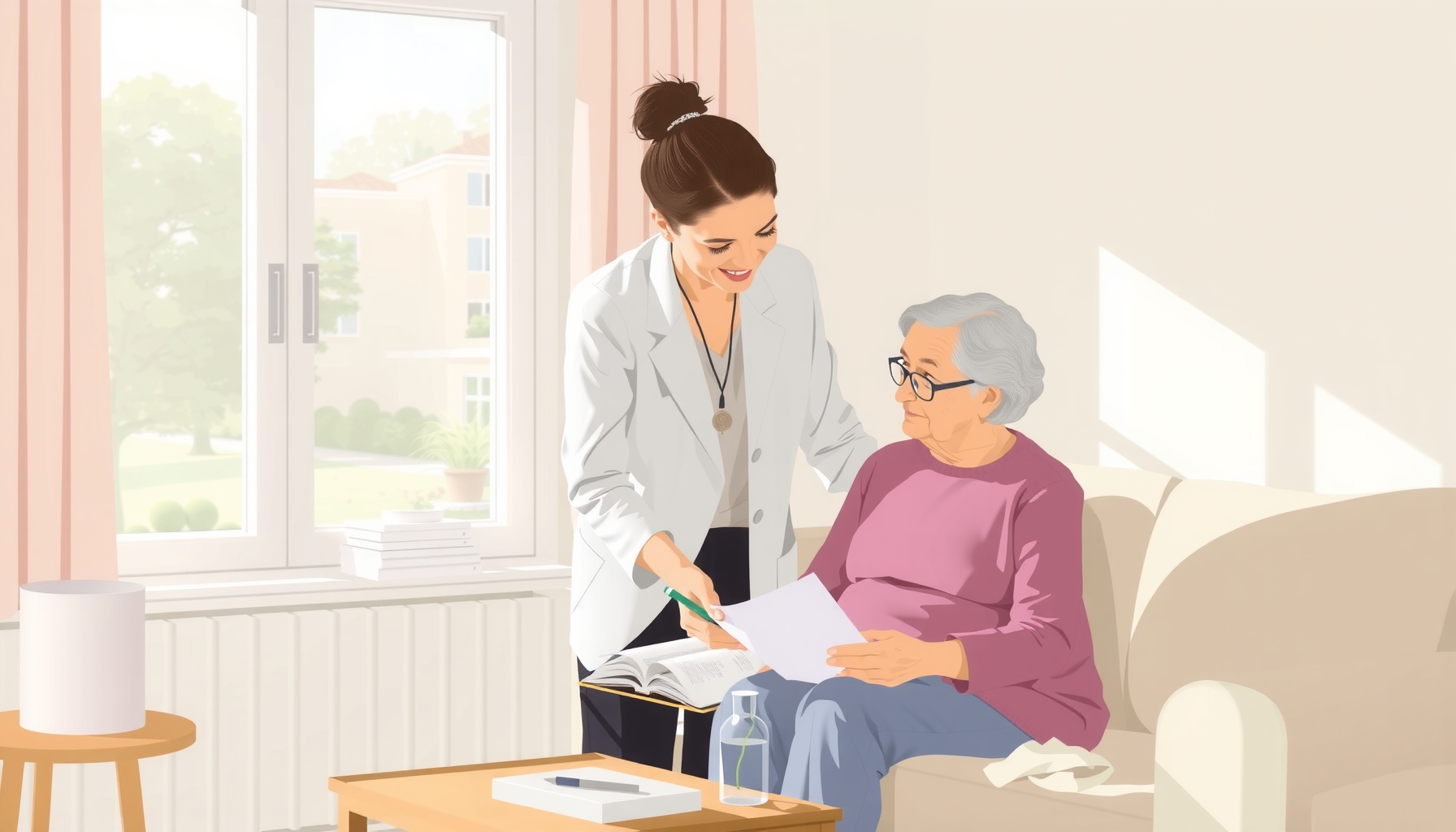
The growing need for specialized elder assistance has made Licensing Requirements For Home Health Aides an important factor in ensuring high-quality care. Federal regulations mandate a minimum standard: 75 training hours, 16 clinical hours, competency evaluations, and regular continuing education for Medicare-affiliated agencies.
These baseline regulations are further shaped by state-specific laws, affecting background verification, supervision standards, and practice scopes, which in turn influence agency hiring policies and caregiver mobility.
Knowledge of approved training protocols and competency evaluation processes helps new aides strategically plan their careers, while agencies benefit from maintaining compliance with evolving regulatory frameworks to deliver top-notch services.
State-Specific Certification Guidelines
Certification guidelines vary significantly between states, impacting training hours, exams, and supervised clinical requirements.
These differences create unique challenges for caregivers and affect service standards across regions.
Impact on Quality of Care
- Certification guidelines ensure that aides provide consistent and safe care.
- Supervision standards often include RN oversight, documented visits, and task limitations as dictated by state laws.
- Continuing education and competency evaluations are key to maintaining high care quality and meeting client protection standards.
Background verification processes, including fingerprinting, health screenings, and criminal checks, play a significant role in the credentialing process, often affecting start dates and reciprocity across state lines.
Support and Resources
Governmental support through tuition aid, workforce grants, and approved training programs offered by state health boards makes entry into the profession more accessible. These resources help navigate aide training and compliance verification while advancing professional development opportunities.

Introduction to Home Care Regulations
Certification guidelines play a pivotal role in how agencies hire and train home health aides and inhome care providers. These home care regulations establish service standards for safety, documentation, and oversight, ensuring families can rely on care plans.
Home health aide certification pathways and compliance standards guide provider policies, clinical records, and supervision standards.
Certification guidelines help job seekers satisfy required qualifications, simultaneously elevating care quality.
Across Medicare, Medicaid, and state laws, the regulatory framework aligns on safety, infection control, and competency. Background verification processes and TB screenings mitigate risks and bolster accountability.
Thus, coherent care guidelines and oversight ensure ethical, consistent support.
What Are Home Care Regulations?
Home care regulations represent a comprehensive regulatory framework that safeguards client and caregiver interests. These regulations, defined by certification guidelines, create a multi-tiered system where federal standards establish the baseline and states flesh out operational specifics.
Supervision standards for inhome care providers necessitate qualified oversight and documented competencies to maintain safe practices.
Key Aspects of Home Care Regulations
- Background verification and criminal checks are crucial for protecting both clients and workers through effective screening policies.
- State laws differ on licensing, competency evaluations, and inspection schedules, requiring providers to adhere to local compliance standards.
- As the landscape evolves with telehealth and data security, health regulations adapt to accommodate demographic shifts and technology advancements.
Future Trends in Home Care Regulations
Caregiver instruction and continuing education initiatives will likely expand to meet the challenges posed by new technologies and aging populations. Regulatory bodies are expected to enhance oversight measures and training programs, thus reinforcing the quality of care through certification authorities and documented professional standards.
Home Care Regulations
- Certification guidelines ensure that home health aides meet required qualifications and elevate care quality.
- Home care regulations align with Medicare, Medicaid, and state laws to prioritize safety, infection control, and competency.
- Background verification and TB screenings are essential for risk mitigation and accountability in home care services.
- Regulatory frameworks adapt to technological advancements and demographic changes, ensuring effective care delivery.
Importance of Instruction Laws for Caregivers
Clear rules elevate daily care into a dependable, rights‑protecting service for every client.
Caregiver instruction laws set expectations that uphold safety, dignity, and consistent outcomes for in‑home support. Home health aide certification creates a legal framework for training, documentation, and supervision requirements for inhome care providers, strengthening professionalism and accountability.
Licensing requirements for home health aides align competencies with patient care guidelines and ethical practice.
Background verification reduces risk and supports client protection standards across settings.
Approved training and continuing education maintain skills as needs and technologies evolve.
- Higher care quality through standardized skills and protocols.
- Clear supervision, delegation, and documentation practices.
- Defined roles that protect clients and caregivers legally.
Key legal requirements appear next, outlining how these rules translate into daily, compliant practice.
Understanding Caregiver Instruction Laws
Caregiver instruction laws play a significant role in defining daily routines within home settings. Licensing requirements for home health aides determine service delivery, task permissions, and caregiver instruction documentation for safe practice.
Licensing and Certification
Certification guidelines anchor training scope, competency evaluations, and continuing education. This ensures that caregivers maintain verified credentials and adapt to evolving standards.
Background Verification and Supervision
Background checks screen for disqualifying offenses, supporting screening policies and ensuring client protection standards. Supervision standards establish oversight protocols to keep tasks within the lawful scope.
Staying Compliant
- Caregivers monitor legal changes and agency policy updates.
- Engagement in professional development aligned with service standards is essential.
- Compliance verification is achieved through adherence to oversight measures.
Remaining informed of changes in state laws and professional guidance helps caregivers maintain compliance and deliver exceptional services.
Caregiver Instruction Laws
- Caregiver instruction laws ensure safety and dignity for clients by setting clear expectations.
- Licensing and certification requirements align caregiver competencies with ethical practice standards.
- Background verification processes enhance client protection by screening for disqualifying offenses.
- Ongoing professional development and compliance verification are crucial for maintaining service quality.
Background Verification in Home Health
Certification guidelines ensure that thorough background verification processes are in place. Home care regulations emphasize the importance of structured and compliant procedures to enhance client safety.
Steps in Background Checks
- Caregiver instruction begins with the verification of identity, employing state laws and supervision standards to conduct criminal checks at multiple levels and review the sex offender registry.
- Compliance standards require obtaining explicit candidate consent, with clear disclosures provided upfront. Documented adverse action steps should align with the Fair Credit Reporting Act (FCRA) and applicable state regulations.
- Health aide training reinforces screening policies by incorporating drug testing, motor vehicle record checks, and license status verification to uphold client protection standards.
- Caregiver programs that utilize accredited Consumer Reporting Agencies (CRAs) and automated databases expedite results, minimize errors, and ensure compliance verification.
Legal Implications and Client Safety
Background verification in the home health sector connects practical screening steps to legal duties. Supervision standards involve collecting disclosures, obtaining written consent, and documenting all steps under compliance guidelines.
- Home health education intersects with privacy concerns, requiring standalone disclosures and secured authorizations to follow FCRA processes, respecting candidate rights while ensuring policy checks.
- Verification procedures reduce incidents and validate history, enhancing background verification for clients, particularly those considered at-risk.
- Oversight protocols recommend using accredited agencies and technological tools for ongoing monitoring, ensuring safety protocols are consistently reinforced.
Background Verification in Home Health ensures a safer care environment through structured and consistent practices, delineating clear responsibilities for providers to follow necessary legal and safety measures.
Background Verification
- Thorough background checks are essential for client safety in home health care.
- Compliance with the Fair Credit Reporting Act (FCRA) is crucial in background verification processes.
- Utilizing accredited Consumer Reporting Agencies (CRAs) can expedite and improve the accuracy of verification results.
- Structured verification procedures help in reducing incidents and validating caregiver history.
Core Supervision Roles and Responsibilities
Certification guidelines guide the licensing requirements for home health aides, shaping how supervisors plan visits, document oversight, and ensure care plans translate into consistent daily practices. Home health aide certification monitoring includes verifying verified credentials, onboarding, and check-ins tied to risk levels and client acuity.
Background verification for home health aides aligns with state laws and screening policies to protect clients.
Supervision requirements for in-home care providers include in-person introductions, early visit accompaniment, and periodic in-home reviews.
Caregiver instruction is reinforced through in-service training, universal precautions refreshers, and care plan competency evaluations. Supervision standards enhance service quality, increase client trust, and strengthen compliance standards across agencies.
Supervision Standards for In-Home Care
Caregiver instruction plays a key role in defining supervision requirements for in-home care providers.
Certification guidelines determine who observes care, how often, and what documentation proves adherence. Licensing requirements for home health aides connect supervision to care guidelines, with RN-led assessments, skill evaluation, and follow-ups when deficiencies arise.
Home care regulations tie home health aide certification oversight to in-home care protocols, ensuring care plans are executed as written.
Background verification for home health aides links supervision to caregiver instruction laws, reinforcing client protection standards.
Emerging trends include virtual check-ins, real-time apps, and data dashboards that flag risks.
Continuing education and caregiver instruction sustain competency evaluations while promoting measurable patient care guidelines.
| Supervision Roles | Certification Guidelines |
|---|---|
| Plan visits and document oversight | Guide licensing requirements |
| Ensure consistent daily practices | Verify verified credentials |
| In-person introductions and reviews | Connect supervision to care guidelines |
Key Components of Effective Training Programs
Certification guidelines and state laws require effective training programs to offer comprehensive learning experiences that bridge theory with practice. Supervision standards ensure that instructors guide students through both classroom instruction and real-world applications, ensuring skill development is thorough and consistent.
Curriculum design needs to encompass topics such as infection control, vital signs measurement, and mobility assistance.
These areas, along with communication and safety protocols, are aligned with care guidelines and client protection standards.
Practical experience is a cornerstone of health aide training.
Supervised clinical hours, scenario-based labs, and detailed checklists ensure proper skill assessments and ongoing competency evaluations happen.
Background verification through criminal checks is crucial for protecting clients and maintaining trust throughout training.
Service standards are upheld by these measures, ensuring a safe and professional environment.
Professional development continues through mandated courses such as CPR and dementia care, meeting the compliance standards imposed by health boards.
Health Aide Training Programs
Screening policies in health aide training programs are essential for aligning with modern demands and ensuring professional standards.
Education initiatives focus on blending foundational caregiving protocols with advanced learning strategies to meet both regulatory frameworks and real-world challenges head-on.
Technology Integration
Technology integration plays a significant role in modern training, utilizing e-learning platforms, microvideos, and simulations.
These methods reinforce caregiving protocols and track progress, enhancing professional guidance and service standards compliance.
Digital logs allow for a structured approach to skill evaluation and education courses.
Challenges in Training Implementation
Compliance verification is made difficult by hurdles such as limited funding and inconsistent state laws. These obstacles hinder the widespread standardization and accessibility of training programs, affecting provider qualifications and oversight measures negatively.
Resource gaps often lead to disparities in aide recognition and proficiency assessments, complicating accreditation standards and personal care training efforts.
Evaluation and Oversight Measures
Evaluation methods are a blend of supervisor rubrics, case-based OSCEs, and proficiency assessments conducted through audits and feedback loops. These oversight protocols ensure training effectiveness and education initiatives succeed.
Oversight measures involve tying evaluation results to remediation plans, ensuring alignment with agency service standards and supervision criteria.
This approach enhances regulatory framework compliance and ensures safe, consistent in-home care.
- Certification guidelines and state laws mandate comprehensive learning experiences in training programs.
- Curriculum design should include infection control, vital signs measurement, and mobility assistance.
- Practical experience is essential, with supervised clinical hours and scenario-based labs being crucial components.
- Technology integration enhances training through e-learning platforms and simulations.
Introduction
Certification guidelines in home health aid emphasize the significance of protocols that safeguard clients. These protocols align with regulatory frameworks to elevate the quality of daily care.
Licensing requirements for home health aides clearly define boundaries for clinical tasks, documentation, and communication, thus strengthening compliance standards and enhancing client protection standards.
The guidelines focus on risk-aware routines, incident reporting, and clear care plans to ensure consistency.
Reinforcing infection control, medication reminders, and privacy practices, the licensing requirements are guided by home care regulations. Home health aide certification makes transitions seamless towards understanding “In-Home Care Protocols Explained,” setting expectations for safety, respect, and accountability.
- Safety first: Standardized checklists reduce errors and improve outcomes.
- Compliance: Ensures alignment with state laws, screening policies, and care guidelines.
- Consistency: Repeatable steps ensure reliable, person-centered support.
In-Home Care Protocols Explained
Health aide training builds a foundation, anchoring protocols in verified credentials and trust. Background verification for inhome care providers defines clear roles, escalation steps, and documentation, supporting authorized oversight and oversight protocols. Competency evaluations and background verification complement infection control, risk assessments, and patient care guidelines, protecting both caregivers and clients. Supervision standards connect protocols to regulations by standardizing hand hygiene, PPE use, and care plans. Caregiver instruction adapts protocols in urban homes through telehealth triage, while rural settings prioritize emergency routing and supply logistics. Supervision standards tailor dementia cues, fall-prevention layouts, and service standards to each residence.
- Foundations: Prioritizes safety, respect, privacy, and compliance verification.
- Safety: Incorporates home risk scans, medication reconciliation, and incident reporting.
- Adaptation: Urban vs. rural access, specialized equipment, and caregiver instruction.
Home Health Aide Certification
- Certification ensures adherence to regulatory frameworks, enhancing care quality.
- Standardized protocols reduce errors and improve safety and client outcomes.
- Background verification and competency evaluations protect both caregivers and clients.
- Adaptation of protocols considers urban and rural differences, ensuring effective care delivery.
Introduction to Client Protection in Home Care
Families choosing in-home support want more than convenience—they expect consistent client protection standards built into every visit and interaction. Licensing requirements for home health aides establish the baseline for safe care, while policies on privacy, informed consent, and respectful treatment safeguard autonomy and dignity.
Certification guidelines and background checks help verify competence and trustworthiness before assignment.
Risk management measures, such as medication safety and infection control, reduce preventable harms and strengthen compliance.
Clear complaint processes ensure issues are documented and resolved promptly, creating accountability. This foundation leads directly into how to operationalize protection in daily practice.
Next: How to Ensure Client Protection Standards.
How to Ensure Client Protection Standards
Embedding safeguards into every shift and task transforms principles into practice. Certification guidelines align regulatory compliance with daily routines.
Care plans reflect patient care guidelines, HIPAA rules shape documentation, and incident reporting supports continuous improvement.
Safety protocols like fall prevention, medication reconciliation, and infection control are reinforced through checklists and brief huddles.
Mobile care apps enable real-time oversight.
Integrating Caregiver Instruction Laws
Caregiver instruction laws connect training, supervision, and competency checks, ensuring consistent quality across teams. These supervision standards facilitate proficiency assessment and professional development.
Technology-enabled monitoring balances safety with privacy by using audit trails, permission controls, and least-access principles. This comprehensive approach prepares readers for best-practice takeaways.
Client Protection in Home Care
- Licensing requirements for home health aides establish the baseline for safe care.
- Certification guidelines and background checks verify competence and trustworthiness.
- Risk management measures like medication safety and infection control reduce preventable harms.
- Clear complaint processes ensure issues are documented and resolved promptly, creating accountability.